

Reviewed · STONE TOWN TOURS
3-Hour Private Stone Town Walking Tour
Stone Town is best understood on foot, one shaded lane and carved doorway at a time. This private tour links the Old Fort, the former slave market, Darajani Bazaar, and Freddie Mercury’s birthplace while explaining how Arabic, Indian, Persian, British, and Swahili influences meet here. I like the private format, and I like the way the route includes everyday places such as the market and Jamat Khana, not just famous facades.
I also like that guides such as Hassan and Ahmad can adjust the conversation to your interests. The main trade-off is simple: three hours is enough for a strong first look, but not enough to linger at every stop, shop, or museum display.
Key points to know before you book
- A private three-hour route: Your group walks with its own guide rather than joining a large party.
- Major sights and local corners: The route covers the Old Fort, Forodhani Gardens, Darajani Bazaar, narrow lanes, carved doors, and Jamat Khana.
- Strong historical range: You move from sultan-era buildings to the slave trade, colonial influence, and Freddie Mercury’s childhood.
- Guides with clear English: Hassan and Ahmad are specifically praised for their communication, flexibility, and ability to explain Stone Town’s architecture.
- Good value at $35 per person: Admission is listed as free at the stops, so the price mainly pays for the guide’s time and local insight.
- A walking tour with a firm limit: The Old Fort, market, and former slave market receive about 18 minutes each, while the wider Stone Town walk gets about 72 minutes.
Why Stone Town works best with a local guide

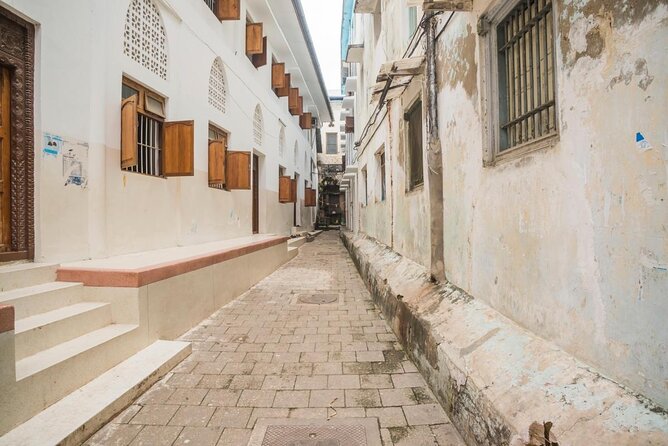
Stone Town can look confusing at first. Streets twist without much warning, buildings press close together, and a plain-looking door may tell more about Zanzibar’s past than a grand monument. A guide gives those details a place in the story.
This tour focuses on the way several cultures shaped the city. Arabic and Persian connections appear in the old sultanate buildings and Islamic traditions. Indian influence can be seen in trade, shopfronts, and carved doors. British rule forms another layer. Swahili life ties the whole place together.
I like this approach because Stone Town is not a tidy museum district. It is a working city. You see residents moving through narrow streets, shopkeepers at market stalls, and old buildings used for daily life. A guide can point out what you might otherwise walk past.
The private setup matters here. You can ask why a doorway has a certain motif, stop for a photograph, or spend more time on the slave trade, architecture, or Freddie Mercury, depending on your interests. The guide has no larger group to hurry along or entertain.
The tour begins and ends at the Old Fort on Mizingani Road. It lasts about three hours, and the route is on foot. Since the walk covers several parts of Stone Town, comfortable shoes and protection from the sun will make the experience easier, although those practical details are not supplied as formal tour requirements.
More Private Tours in Zanzibar
- Stone Town Private Walking Tour
★ 5.0 · 371 reviews - Zanzibar: 3 Hours Private Stone Town walking Tour with Guide
★ 4.6 · 301 reviews - Full-Day Private Stone Town +Spice Farm and Prison Island Tour
★ 4.5 · 216 reviews
Starting beside the Old Fort
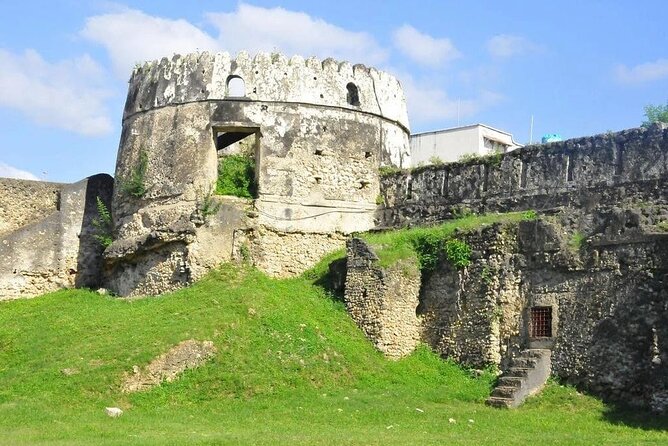
The Old Fort is a natural place to begin. Also called the Arab Fort, it sits on the main seafront beside the House of Wonders and across from Forodhani Gardens. It is described as the oldest building in Stone Town, so this first stop gives you an immediate sense of the city’s age and strategic importance.
You have about 18 minutes here. That is enough for an introduction, a look at the fort’s position, and a few questions, but not a long independent exploration. The admission charge is listed as free.
The fort is useful as a starting point because it puts several key parts of Stone Town in one view. The sea, the old palace district, public gardens, and defensive structure all meet nearby. Your guide can help explain how the waterfront connected Zanzibar to wider trade routes and political power.
Do not expect the entire tour to stay inside historic monuments. The real point is how the fort connects to the streets around it. Once you leave, the route shifts from a single building to the layered city itself.
Forodhani Gardens after sunset
Forodhani Gardens runs along the seafront in front of the Old Fort and House of Wonders. It is especially busy after sunset, when local residents and visitors gather around food stalls.
The tour allows about 18 minutes here. If your walk takes place during the day, you may see the setting without the full evening food market. If it takes place after dark, the scene changes into a popular place to eat Swahili and Zanzibari dishes.
Foods associated with the gardens include grilled seafood, samosas, cassava, sweet potatoes, Zanzibar mix, also called urojo, and Zanzibar pizza. The food is part of the place’s appeal, but this is not presented as a dedicated food tour. Treat it as a useful introduction, then ask your guide what is worth trying if you plan to return later.
I like this stop because it shows Stone Town as a living waterfront district rather than a collection of old buildings. The gardens also provide a pause after the fort and a clear landmark for finding your way around the seafront.
The Old Customs House and its carved door
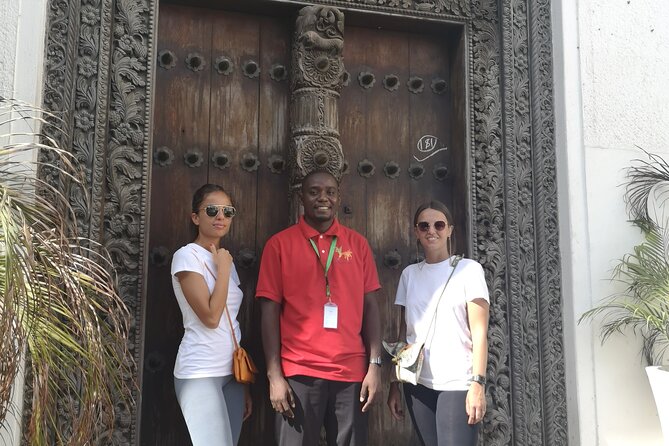
The Old Customs House is on Mizingani Road, facing the sea. Built in the 18th century, it carries a strong connection to the sultanate period. The grandson of Sultan Said was proclaimed sultan here in 1896, giving the building a direct link to Zanzibar’s royal past.
You have about 18 minutes at this stop. The most notable feature described is its beautifully carved wooden door, decorated with fish, lotus, and anchor motifs. This is the kind of detail that makes a guide useful. Without explanation, you might see an attractive door. With context, the carvings become clues about maritime life, trade, and the people who shaped Stone Town’s design.
The stop is brief, so do not expect a full tour of every room or historical event connected with the building. Its value is in the exterior, the story, and the chance to begin reading Stone Town’s doors and facades with more care.
More Walking Tours in Zanzibar
- Zanzibar: Stone Town Historical Cultural Walking Guided Tour
★ 4.5 · 179 reviews - Stonetown: Food Markets and Street Food Walking Tour
★ 4.7 · 151 reviews - Zanzibar Stone Town Walking Tour
★ 5.0 · 145 reviews - Stone Town Historical Walking Tour
★ 5.0 · 143 reviews
The long walk through Stone Town
The broad Stone Town portion takes about 72 minutes, making it the heart of the experience. Stone Town became a UNESCO World Heritage site in 2000 because its 19th-century architecture reflects Arab, Persian, Indian, and European influences within Swahili culture.
The route includes well-known sights, but it also turns toward less obvious cultural points. You are taken through narrow streets, past Zanzibar’s carved doors, and toward the Ismail Khoja Jamat Khana. The city center, including Jaws Corner, is also part of the walk.
This is where the tour earns its keep. The famous buildings are easy to list, but the city’s character comes from the spaces between them. You might notice balconies, shutters, door studs, passageways, and the way homes and businesses fit tightly together. Your guide can explain which details reflect religious practice, trade, status, or outside influence.
The private format should be particularly useful here. A large group can make narrow streets awkward and limit questions. With your own guide, you can ask for more detail on architecture or local life. Hassan is described as tailoring the route to requested stops, and another guide, Ahmad, is praised for clear communication and a professional manner.
The guide’s English matters on a history-heavy walk. Hassan is specifically noted for speaking clearly, while the strongest feedback about both Hassan and Ahmad centers on their explanations, patience, and ability to answer questions. The descriptions also note that Hassan has artistic talent and sells or creates artwork, which may interest you if you want a local souvenir. That is an optional extra, not a stated part of the tour.
The drawback is pace. Seventy-two minutes sounds generous, but Stone Town contains far more detail than one hour can cover. If you stop often for photographs or long questions, the guide may need to shorten another part of the route. Tell the guide early what matters most to you.
Darajani Bazaar: the city’s everyday market
Darajani Bazaar is also called the spice market or local market. It is a useful contrast to the formal buildings along the waterfront. Here, the emphasis shifts to fresh food and ordinary trade.
The market sells fruit, fish, spices, and other fresh goods. You have about 18 minutes, which is enough to take in the sights and smells and ask questions about what you are seeing. It is not enough for a slow market study or a long shopping session.
I value this stop because it brings the tour back to present-day Zanzibar. The old forts and palaces explain power. The market shows how people shop and work now. Your guide can also help you understand the role of spices in Zanzibar’s identity without turning the whole walk into a staged shopping stop.
Use basic market manners. Ask before photographing people, and stay close enough to your guide to avoid losing the route in the crowded lanes. The provided information does not promise shopping time, specific tastings, or a spice demonstration, so book this as a market visit rather than a food activity.
The former slave market and Anglican Cathedral
The old slave market and Anglican Cathedral are among the most serious stops. For centuries, Zanzibar was a center of political and economic power in East Africa, and it was also the site of a notorious slave market.
People captured on the mainland were brought to Zanzibar in chains and sold in the city. The market closed in 1873 on the order of the sultan. The site now forms part of the story of abolition, not only in Africa but in wider world history.
You have about 18 minutes here. The stop is short, but the subject is not. Give it your attention. The historical material can be difficult, and a good guide should help you understand the place without reducing it to a quick photograph.
The cathedral adds another layer to the site and to the history of abolition. This is one of the places where the tour’s mix of political, religious, and architectural history becomes clear. I would not treat this as a light sightseeing stop. It is valuable precisely because it asks you to confront a painful part of Zanzibar’s past.
Freddie Mercury’s Zanzibar connection

The final listed stop is the Freddie Mercury Museum in the heart of Stone Town. Freddie Mercury was born in Zanzibar and moved to England around 1963. The museum presents his birthplace, Zoroastrian roots, childhood, schooling in Panchgani, India, and later career.
This gives the walk a very different ending. After forts, markets, royal buildings, and the slave trade, you reach a modern cultural figure whose life crossed Zanzibar, India, and England. It is a reminder that Stone Town’s connections to the outside world did not end with the sultanate or colonial period.
The stop is listed at about 18 minutes, with admission shown as free. That is a short visit, so expect an introduction rather than an extended museum session. If Freddie Mercury is your main reason for booking, confirm the amount of time available with the guide before you start.
For everyone else, the museum works as a compact final chapter. It gives the walk a personal story after so much discussion of institutions and buildings.
What $35 per person gets you
At $35 per person, this is a reasonable price for a private, three-hour city walk, especially if two or more people share the experience. The listed stops have no admission charge, so you are mainly paying for the guide’s time, local knowledge, route planning, and interpretation.
The value depends on how much you use the private format. If you ask questions, request a focus on architecture, or want more context at the slave market and market district, the guide can make the time feel worthwhile. If you prefer to move silently from one landmark to the next, you will get less from the arrangement.
The tour receives a 4.8 rating from 44 reviews, with 95 percent recommending it. The strongest praise centers on the guides’ clear English, preparation, friendliness, historical explanations, and willingness to tailor the route. Those qualities matter more than the free admission, since Stone Town’s greatest value lies in interpretation.
The stated tour length is approximate. The individual stop times add up to nearly three hours, with most major stops limited to 18 minutes. Plan for a steady walk rather than a slow, unstructured wander.
Who should book this Stone Town walk?
I would choose this tour for a first visit to Zanzibar, especially if you want one guide to connect architecture, religion, trade, slavery, food, and popular culture. It suits couples, families, friends, and solo visitors who prefer not to join a large group.
It is also a good choice if you care about doors, buildings, and local streets as much as major landmarks. The route includes enough cultural detail to make a return walk more rewarding.
You may want a different plan if you need long museum visits, extensive shopping time, or a dedicated food tour. The three-hour schedule covers a lot, but each stop is tightly timed. The private format helps, yet it cannot turn a short walk into a full-day study of Stone Town.
The activity accepts service animals, is near public transportation, and is described as suitable for most people. Confirmation is received at booking. Free cancellation is available up to 24 hours before the start time, while cancellations or changes within 24 hours are not refunded or accepted.
Should you book it?
Book this tour if you want a clear first reading of Stone Town and prefer a private guide who can answer questions as the city unfolds. Hassan and Ahmad are the names most closely associated with the praised guiding style, and the route gives you a useful blend of major monuments and ordinary streets.
At $35 per person, it offers solid value for three hours, particularly when shared by a small private group. Just keep your expectations in line with the clock: this is an informed introduction, not a full study of every building or museum. For most first-time visitors, that makes it a practical and worthwhile start.
FAQ
How long does the Stone Town walking tour last?
The tour lasts approximately three hours. The listed stops include several visits of about 18 minutes, with about 72 minutes devoted to walking through Stone Town itself.
Where does the tour begin and end?
The tour begins at the Old Fort on Mizingani Road in Zanzibar, Tanzania. It ends back at the same meeting point.
Is this a private tour?
Yes. Only your group participates in the activity.
What places are included?
The route includes the Old Fort, Forodhani Gardens, the Old Customs House, Stone Town streets and cultural sites, Darajani Bazaar, the old slave market and Anglican Cathedral, and the Freddie Mercury Museum.
How much does the tour cost?
The listed price is $35 per person.
Can I cancel for a full refund?
Yes, if you cancel at least 24 hours before the experience start time. Cancellations made less than 24 hours before the start time are not refunded, and changes within that period are not accepted.
More Short Outings in Zanzibar
- 3 Hours Private Stone Town Walking Tour
★ 5.0 · 71 reviews - Zanzibar: Stone Town 3-Hour Walking Tour
★ 4.1 · 68 reviews - 3-Hour Private City Tour in Zanzibar Island
★ 5.0 · 47 reviews - 3-hour quad bike tours in Nungwi and Kendwa along coastal paths and through villages
★ 4.1 · 7 reviews
More Stone Town Tours
- Zanzibar: Stone Town, Spice Tour, Prison Island with Lunch
★ 4.4 · 1,219 reviews - Zanzibar: Prison Island, Stone Town, & Spice Farm Tour
★ 4.5 · 579 reviews - Zanzibar; Prison Island, Nakupenda, StoneTown Tour with BBQ
★ 4.3 · 457 reviews - Zanzibar: Stone Town, Spice tour & Prison Island with Lunch
★ 4.6 · 453 reviews
Just added around Zanzibar
- Walking in Stone Town with a Expert Tourguide★ 3.7 · 3 reviews
- Stone Town Tour★ 5.0 · 16 reviews
- Jet Ski Experience from Kendwa Beach★ 5.0 · 21 reviews
- Turtle Snorkeling, Jozani Forest, Kuza Cave, Rock Restaurant★ 3.7 · 8 reviews
- Zanzibar boat rental/charters★ 5.0 · 6 reviews
- Prison island(Changuu island) & stone town walking tour★ 5.0 · 6 reviews
- Full Day Private Zanzibar Triple Delight Tour★ 4.5 · 3 reviews
- Zanzibar Tumbatu Island Cultural Experience★ 5.0 · 4 reviews
Stone Town Tours, compared.

Stone Town, Spice Tour, Prison Island with Lunch
Read our review →
Prison Island, Nakupenda, StoneTown Tour with BBQ
Read our review →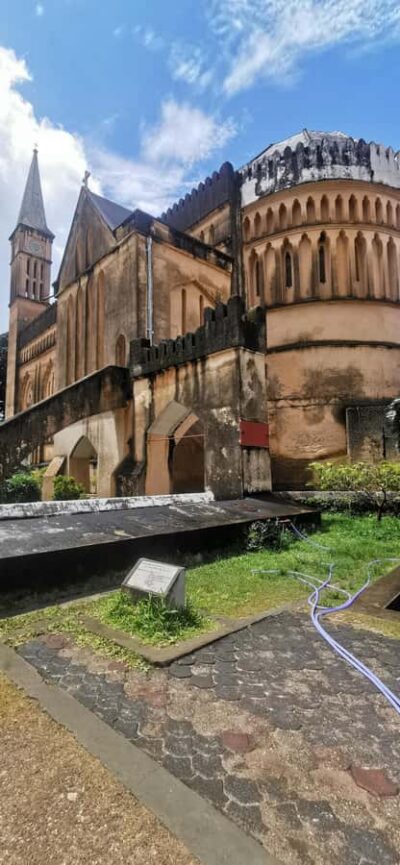
3 Hours Private Stone Town walking Tour with Guide
Read our review →
Stone Town Historical Cultural Walking Guided Tour
Read our review →
Stonetown: Food Markets and Street Food Walking Tour
Read our review →

Zanzibar full day Jozani forest + Spice farm and stone town
Read our review →
Browse the lists this tour appears in