
Reviewed · DAY TRIPS IN MOSHI
1-Day Moshi Villages bike tour
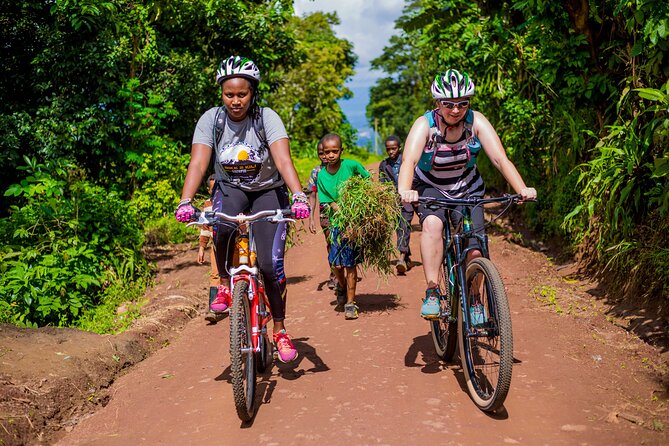
The best part of this Moshi bike tour is the way it moves you beyond the town center and into the working countryside. You pedal through rice fields, sugarcane plantations, forest, and small villages, with distant views toward Mount Kilimanjaro and plenty of ordinary local life along the way.
I like the mix of scenery and culture. You get Rau Forest, where colobus monkeys may sit high in the trees, then markets, an old railway station, a Hindu temple, and Clock Town. I also like the practical setup: bicycle, guide, transport, water, lunch, and fees are included for $50.
The main caution is the road surface. Some sections are rough and bumpy, and one person with knee trouble had to cut the ride short and miss the market and lunch. This is a good half-day outing for an active visitor, but it is not a smooth city cycle.
Key points before you book
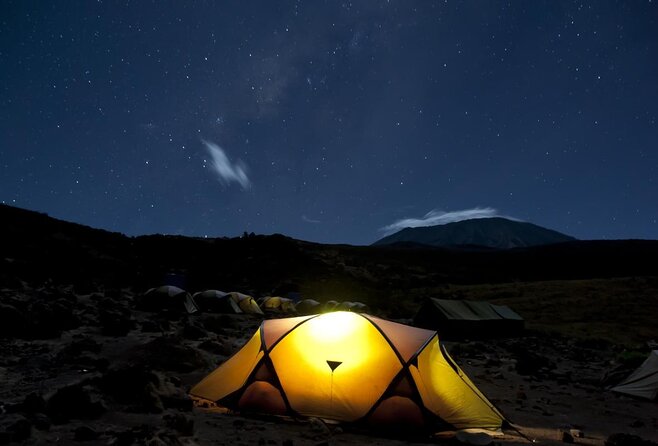
- Rau Forest is the scenic centerpiece: Ride under the trees and watch for black-and-white colobus monkeys in the high branches.
- The route mixes town and countryside: Rice paddies, sugarcane fields, village homes, markets, and historic Moshi sites all fit into one outing.
- The riding is genuinely active: The tour uses paved roads and off-road tracks, with rough ground in places.
- Local guides shape the day: Guides identified with this experience include Alpha, also written Alfa, and Said. Their role includes route support and stories about the area and its people.
- Lunch is part of the value: You receive a lunch box, soda, and mineral water, or a traditional hot meal in a restaurant.
- The group can reach 20 people: You might ride with others, although smaller groups can occur.
Why this route gives you more than a town ride
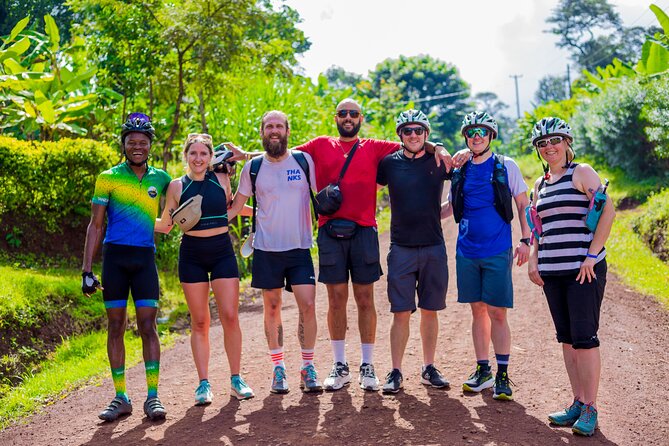
Moshi is a useful base for Kilimanjaro trips, but it can be easy to see only its streets, cafés, and tour offices. This bike ride gives you a look at the land around the town, where farming and transport routes still shape daily life.
The route passes through the Kilimanjaro region, home to Africa’s highest mountain. You do not ride up Kilimanjaro, of course. Instead, you get distant views from open country where tall buildings and heavy tree cover do not block the horizon.
I like that the ride connects several different settings instead of repeating one type of road. You begin among fields and forest, pass through villages, then reach Moshi’s markets and old transport landmarks. That variety makes the outing feel like a small orientation to the area rather than simple exercise.
The Chagga cultural setting is another reason to consider it. The route shows how local farmers use rice fields, sugarcane plots, and other farmland. You see the work behind the food and scenery, not just a viewpoint arranged for visitors.
More Day Trips in Moshi
- Materuni Waterfalls & Chemka Hotsprings Day Trip
★ 5.0 · 214 reviews - Materuni waterfalls coffee tour & Chemka hot springs Day trip
★ 5.0 · 131 reviews - Day Trip Coffee Tour and Materuni Waterfalls
★ 5.0 · 35 reviews
Starting from central Moshi
The meeting point is Bike2kili Safaris on Market Street, near Mission Street. Pickup is offered, and private transportation is included, so confirm the pickup details when booking if you are not planning to reach the meeting point yourself.
The activity operates Monday through Saturday, with listed hours from 7:00 a.m. to 6:30 p.m. The actual ride takes about four to five hours. One reported schedule ran from 8:00 a.m. to 1:00 p.m., including pickup and lunch, so plan on giving the morning and part of the afternoon to the outing.
A mobile ticket makes arrival simple. Confirmation is provided at booking, and the tour is near public transportation. The maximum group size is 20, though the experience can sometimes feel more personal. One booking turned into a one-to-one ride, which allowed the guide to adjust the pace and offer close attention.
You should arrive ready to ride, not dressed for a passive sightseeing trip. The route includes rough terrain, so comfortable clothing and footwear make more sense than anything formal. The supplied information does not specify bike sizes or helmet arrangements, so ask the operator about those details before the day if they matter to you.
Rau Forest and the first hour on two wheels
Rau Forest Reserve is one of the most appealing sections of the ride. The route takes you into a wooded area where colobus monkeys may appear in the tree crowns, their long, fluffy tails making them easier to recognize when you spot them.
A monkey sighting is never guaranteed, so treat it as a possibility rather than the main purpose of the forest stop. Keep looking upward and listen to the guide, who can help point out movement in the branches.
The forest also changes the feel of the ride. After open fields, the shade and trees offer a cooler break, though the surface may still be uneven. This is where the tour feels most like an active outing rather than a standard road trip.
The path is a mix of paved and off-road sections. You may ride through sugarcane plantations, rice fields, and wooded tracks during this first part, with time for stops and explanations. The scenery is attractive, but the rough ground can slow the group.
I would take the word bumpy seriously if you have bad knees, hip trouble, or limited cycling practice. One rider found that knee problems made the route difficult enough to skip later parts of the schedule. The guide can help with pacing, but this is not a flat, polished cycle path designed for effortless riding.
Rice fields, sugarcane, and village life
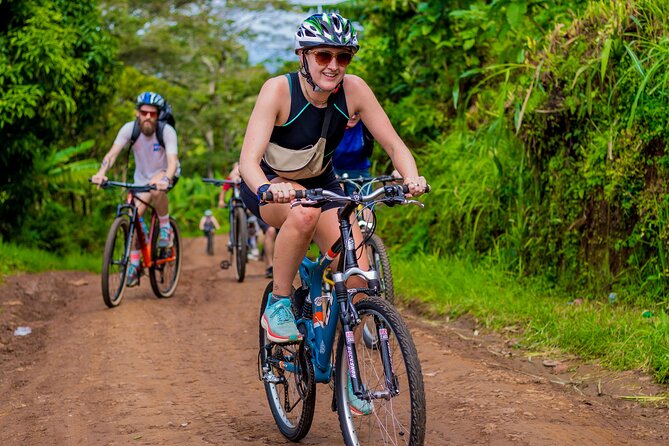
The farming sections are among the most useful parts of the experience because they show how the countryside works. You ride beside rice paddies and sugarcane fields, with smaller farming plots and village homes appearing along the route.
The route also passes the Karanga River and Rau River, as well as the TPC sugarcane fields. These are not isolated photo stops. They form part of a working area where agriculture, water, roads, and homes sit close together.
You may see mosques and large Lutheran churches built during the German colonial period. Those buildings add historical context without turning the ride into a formal museum visit. The guide can explain what you are seeing as you stop along the way.
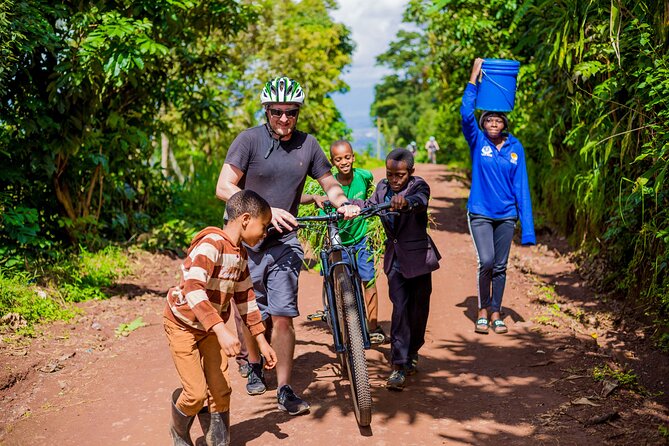
The Chagga connection matters here. The ride presents local farming as a practical skill, including the careful use of land for different crops. You are not simply looking at green fields from a vehicle window. You have time to notice planting patterns, farm work, and how villages connect to the surrounding countryside.
This is also the portion where a guide makes a big difference. Alpha, also written Alfa in the supplied information, is praised for his care, local knowledge, and storytelling. Said is also named as a guide who communicated well and explained the route. Ask at booking which guide is scheduled if that is important to you, since guide assignments can change.
More bike days around Moshi:
- Moshi city bike day trip
★ 5.0 · 17 reviews - Rau Forest Bike tour
★ 5.0 · 12 reviews - Cycling through the TPC plantations
★ 5.0 · 10 reviews - Materuni Waterfall E-Bike Day Trip
★ 5.0 · 9 reviews
Reaching Moshi markets and old landmarks
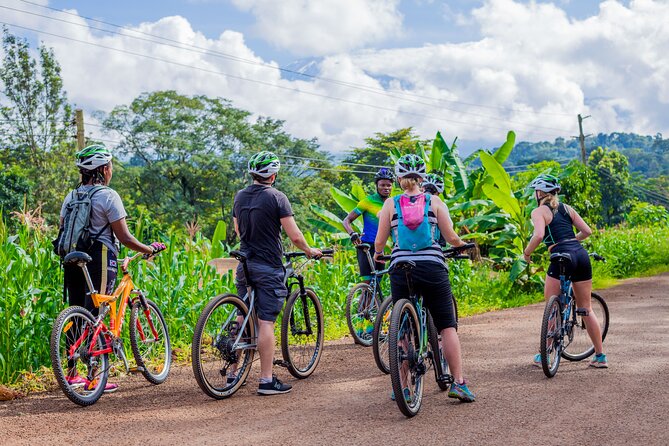
After the rural sections, the ride continues into Moshi. The town portion includes Mbuyuni Market and Manyema Market, with the latter identified as a fish market. These stops add smells, sounds, and everyday commerce to a route that began in forest and farmland.
Markets are useful because they show how the town functions. You may not spend a long time browsing, but the contrast with the quiet rice fields is sharp. If you want a calm ride with no urban traffic or activity, this section may feel less relaxed. If you want a fuller picture of Moshi, it is a strong addition.
The old railway station gives the day another angle. It is described as an old station stuck in time, a reminder of the railway era and the role of transport in connecting this part of Tanzania. The visit is brief rather than a long museum tour, but it works well with the rest of the route.
You also pass through Clock Town in the city center, along with a large Hindu temple and Africa Gift Shop, also called Mama Africa Shop. These stops let you see several sides of Moshi in a short span: markets, religion, commerce, transport, and the central town.
The order of stops may vary, and the detailed timing allows about two hours for Moshi. That is enough to see the listed places without turning the outing into a full city walking tour.
The Kilimanjaro views from open country
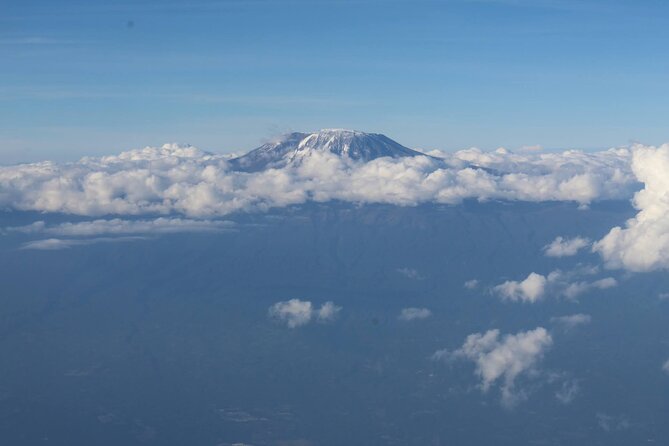
Kilimanjaro is the visual anchor of the wider region. The tour takes you through countryside where open fields may give you a clear look toward the mountain, though clouds and weather control how much you see.
The best views come from the absence of tall buildings and dense trees. You are not at a special mountain platform, but the open farming area can give you a more natural sense of the mountain’s scale and setting.
Keep expectations sensible. A mountain view is weather dependent, and the information does not promise a clear summit view. If Kilimanjaro is hidden, the ride still has the forest, fields, rivers, villages, and town sites to carry the day.
This part of the route also ties the ride together. You see the mountain region not just as a backdrop for climbing trips, but as a place where people farm, worship, trade, and travel. That broader view is one of the tour’s real strengths.
Lunch and what the $50 includes
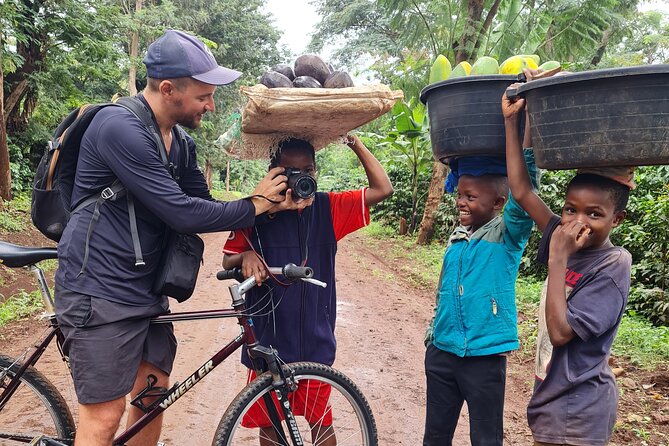
At $50 per person, the tour offers solid value if you want transport and a guide as well as the ride itself. The price includes use of a bicycle, all fees and taxes, a cycling guide, private transportation, mineral water, soda, and lunch.
Lunch may be provided as a box or as a traditional hot meal in a restaurant. Several parts of the experience point to the meal as a satisfying finish, especially for a ride lasting four to five hours. A traditional lunch adds more local character than a quick packaged snack, though the exact format can differ.
The inclusion of water matters in a physical activity. You do not need to budget separately for basic drinks, and you can focus on the ride. Personal purchases and tips are not included, so carry some money if you want something at the markets or gift shop.
Compared with booking a bicycle, guide, transport, and meal separately, the package is straightforward. The value is strongest if you want the guide to handle the route and explain the countryside. It is less compelling if you only want a short, easy bicycle rental around central Moshi.
Who will enjoy this ride most
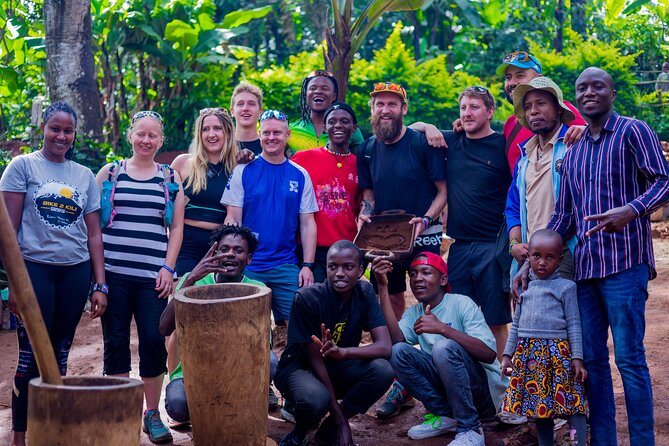
I would recommend this tour to you if you want exercise with your sightseeing. It suits people who enjoy changing scenery, do not mind uneven roads, and want to see Moshi beyond the central streets.
It is also a good fit for visitors with limited time in the area. In one morning, you can reach Rau Forest, farmland, villages, markets, the railway station, Clock Town, and several religious and commercial landmarks.
You do not need to be an expert cyclist, and most people can participate. Still, the route requires enough comfort on a bicycle to handle rough ground. If you have knee problems, you should discuss the route before booking. One rider had to slow down and leave out later parts because of knee pain.
Families and mixed-ability groups should think about the physical side carefully. The maximum group size is 20, and the guide can offer support, but the ride is not described as a special accessible or gentle route.
The tour also suits you if you prefer local contact to a polished sightseeing circuit. You pass working farms, village homes, markets, and places of worship. That does not mean every part is quiet or untouched. The Moshi section is urban and active, while the forest and farm roads feel more open.
Practical details that can change your day
The experience requires good weather. If poor weather causes cancellation, you are offered another date or a full refund. You can cancel for a full refund up to 24 hours before the start time, but changes or cancellations inside that window are not accepted and are not refunded.
The schedule is listed for Monday through Saturday. Sunday availability is not shown, so do not assume the ride runs that day.
Free cancellation is helpful because weather around Kilimanjaro can affect mountain views and cycling conditions. I would still avoid placing this tour immediately before an important flight if you need a large time buffer, since the activity includes several stops and can last up to five hours.
The tour ends back at the meeting point. Pickup is offered, but confirm the exact arrangement and return timing when you book.
Should you book the Moshi villages bike tour?
Book it if you want a well-rounded Moshi morning that combines cycling, farming country, Rau Forest, local markets, historic sites, and a chance to see Kilimanjaro from open ground. The included lunch, water, bicycle, guide, transport, and fees make $50 a fair price for the package.
Skip it if you need smooth roads, dislike physical activity, or have knee trouble that makes rough cycling uncomfortable. You should also choose another plan if your main goal is a guaranteed close view of Kilimanjaro, since mountain visibility depends on weather.
For most active visitors, this is a rewarding way to see how Moshi fits together. The strongest parts are the forest, the agricultural roads, and the guide-led explanations. Ask about the assigned guide, confirm pickup details, and be honest about your cycling ability. With those points settled, the ride offers a practical and personal look at the area.
FAQ
How long does the Moshi villages bike tour take?
The tour lasts approximately four to five hours. One listed schedule ran from 8:00 a.m. to 1:00 p.m., including pickup and lunch.
Where does the tour start?
The meeting point is Bike2kili Safaris on Market Street, Mission Street, Tanzania.
Does the tour include pickup?
Yes. Pickup is offered, and private transportation is included.
Where does the tour finish?
The activity ends back at the meeting point.
What is included in the price?
The price includes a bicycle, cycling guide, private transportation, all fees and taxes, mineral water, soda, and lunch. Lunch may be a box or a traditional hot meal in a restaurant.
Is lunch included?
Yes. Lunch is included, along with soda and mineral water.
Does the route include Rau Forest?
Yes. The route passes through Rau Forest Reserve, where colobus monkeys may be seen in the trees.
Will I see Mount Kilimanjaro?
The tour offers views toward Mount Kilimanjaro from the countryside, but visibility depends on weather and the absence of cloud cover.
How many people can join the tour?
The maximum group size is 20 people.
What is the cancellation policy?
You can cancel at least 24 hours before the start time for a full refund. Cancellations or changes made less than 24 hours before the start time are not refunded. If poor weather cancels the tour, you are offered another date or a full refund.
Just added around Moshi
- Day trip to Materuni waterfall, Coffee tour and Moshi Nightlife★ 5.0 · 6 reviews
- Sip & Paint: Unleash Your Inner Artist!★ 5.0 · 7 reviews
- Rau Forest Bike tour★ 5.0 · 12 reviews
- Private Market Tour and Tanzanian Cooking Class in Moshi★ 5.0 · 7 reviews
- Moshi city bike day trip★ 5.0 · 17 reviews
- Full-Day Moshi Private Forest Walk and Local Market Tour★ 5.0 · 4 reviews
- Private guided tour to the night lifestyle of Moshi town★ 5.0 · 13 reviews
- Savannah Escape & Active Culture Tour★ 5.0 · 9 reviews
Day Trips in Moshi, compared.
Materuni Waterfalls & Chemka Hotsprings Day Trip
Read our review →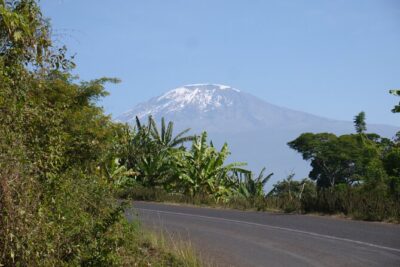
Amazing Chemka (Kikuletwa) Hot Spring Day Trip | Burigi Chato Safaris CO LTD
Read our review →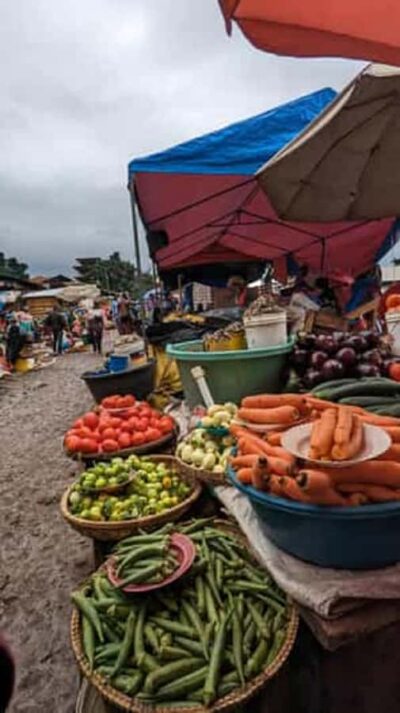
Private Day Trip to Materuni Waterfall and Coffee Tour
Read our review →
Browse the lists this tour appears in