
Reviewed · WALKING TOURS
Dar es Salaam City Walking tour – Explore the Life of the Local People!
Dar es Salaam makes the most sense at street level, and this private tour takes you there. You walk through central neighborhoods, ride public transport, and see daily life alongside major sights such as the National Museum, Kariakoo Bazaar, and the old churches near the harbor.
I like the way guide Aloys Malekela combines city history with ordinary scenes, from a fish market to public buses. I also like the private format, since your group can ask questions and set a comfortable pace. The main drawback is the heat, especially if you are not used to tropical weather, and the fish market can be quite smelly.
Key points to know before booking
- A real street-level introduction: See Dar es Salaam on foot and by public bus rather than from a sealed vehicle.
- Several major stops in one day: The route includes the National Museum, historic churches, Sultan Majjid Building, Kariakoo Bazaar, and Mwenge Curio Shops.
- A private experience: Only your group participates, with guide Aloys Malekela leading the way.
- A useful history lesson: Learn how Sultan Majjid of Zanzibar helped shape the city in the 19th century.
- Plan for tropical heat: The walking, bus rides, and market visits can make the five to seven hour outing feel long.
- Lunch is not included: Bring money for food, since the tour price covers public transport and fees but not lunch or dinner.
Why this Dar es Salaam walk is worth considering
Dar es Salaam is easy to treat as a gateway to Tanzania’s beaches and safaris. That is a mistake if you have even half a day available. The city has a layered past, a busy commercial core, and a daily rhythm that you will not see from a hotel lobby or sightseeing car.
This tour gives you a practical first look at the city. It covers a central area within roughly a three to five kilometer radius, with regular stops for explanations and sightseeing. You get history, religion, commerce, transport, and local street life in one outing.
The private setup matters. You are not tied to the pace of a large group, and you can ask Aloys to explain a detail that catches your attention. The tour is designed for most people who can walk around a city and use public transportation, but it is not a short stroll. Plan on five to seven hours, depending on the pace and the time spent moving between stops.
The tour receives a 4.7 rating and is recommended by 94 percent of past participants. That is a strong signal for a small, personal activity, especially since the best praise focuses on Aloys himself. He is described as friendly, careful, and informative. One participant appreciated how much the tour covered, while another enjoyed the museums and ended the day at local bars.
More City Tours in Dar es Salaam
- Dar es Salaam: City Tour
★ 4.7 · 159 reviews - Dar es Salaam City Tour – Everyday
★ 5.0 · 64 reviews - The Best/Top Rated Cultural City Tour in Dar es Salaam
★ 5.0 · 57 reviews
Starting with Dar es Salaam’s origins

Aloys places the city in historical context at the start. Dar es Salaam was founded by Sultan Majjid in 1862. The sultan lived in Zanzibar and used Dar es Salaam as a weekend retreat, a detail that helps explain the city’s early connection to the island and the wider Swahili coast.
This is not a history lecture separated from the streets. The background gives meaning to the buildings you see later. You can connect the city’s Islamic and Swahili roots with the colonial-era religious buildings and the modern commercial center.
The route stays within a fairly compact part of the city, but compact does not mean quiet. You should expect movement, traffic, people going about their work, and frequent pauses. That is part of the point. The tour is less about checking off monuments in isolation and more about seeing how Dar es Salaam functions around them.
The National Museum, about one hour
The National Museum of Tanzania is the longest scheduled stop, with about an hour set aside. That is useful because a museum visit can easily become rushed when it is squeezed between outdoor sights.
The museum provides a foundation for understanding Tanzania before and after the city walk. The supplied details do not specify the individual galleries or exhibits included during the visit, so you should treat this as a guided introduction rather than expect a particular collection.
I like starting here because the museum gives context before the market and street stops. Afterward, the buildings and neighborhoods have more meaning. If you prefer nonstop outdoor activity, though, this hour may feel slower than the rest of the tour.
Dar es Salaam Fish Market in 20 minutes
The fish market is a short stop, about 20 minutes, but likely one of the most memorable. You see a working part of the city rather than a polished attraction. It offers a direct look at local commerce and the food economy.
You should be ready for strong smells. One participant specifically found the market interesting but smelly, which is a fair warning. This is not a place to visit for comfort or tidy presentation. It is a working market, and the atmosphere may be intense if you are sensitive to heat, odors, or crowded public places.
That said, the stop adds something the museum cannot. You are not simply hearing about city life. You are seeing one of its practical daily systems up close.
More walking tours in Dar es Salaam:
- Dar es Salaam City Center: Walking Tour
★ 4.8 · 102 reviews - Sunrise Beach Walk with Picnic Breakfast Activity
★ 5.0 · 3 reviews - Stone Town Private Walking Tour
★ 5.0 · 371 reviews - Zanzibar: 3 Hours Private Stone Town walking Tour with Guide
★ 4.6 · 301 reviews
Sultan Majjid Building and Missionaries House
The Sultan Majjid Building receives about 40 minutes, making it one of the more substantial architectural stops. Its connection to the city’s founding gives it special weight in the tour. This is where the story of Sultan Majjid moves from a name in the introduction to a physical part of Dar es Salaam.
The Missionaries House follows for roughly 20 minutes. Together, these stops show the mix of influences that shaped the old city. The tour links the buildings to wider changes in religion, trade, and urban life rather than presenting them as unrelated photo stops.
The exact condition, interior access, and display arrangements are not specified, so do not assume that every building functions like a full museum. Much of the value comes from Aloys explaining what you are seeing and how the buildings fit into the city’s past.
Two historic churches near the center
Saint Joseph Church is scheduled for about 15 minutes, followed by 20 minutes at Azania Front Church. The visits are brief, but they add another layer to the route.
You get to see how Christian institutions became part of Dar es Salaam’s built environment alongside Islamic and Swahili influences. The contrast is useful. It keeps the city’s history from being reduced to one tradition or one colonial story.
Short church visits also help break up the walking. You can pause, look closely at the architecture, and listen to the guide before returning to the streets. Since the tour is private, you can ask Aloys to spend more time on one building if your group is especially interested, though the overall duration still needs to allow for the other stops.
Kariakoo Bazaar, about 30 minutes
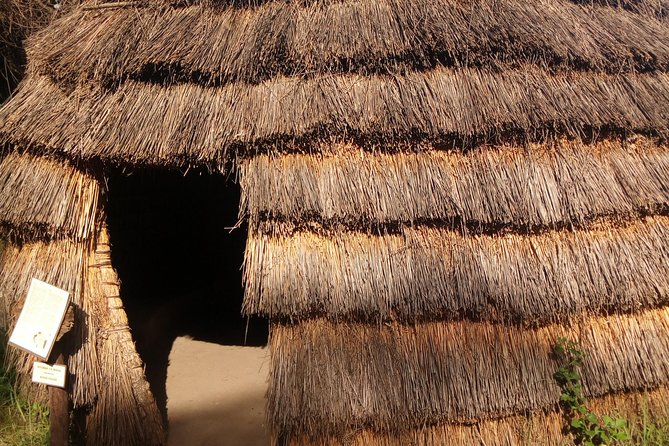
Kariakoo Bazaar is one of the tour’s strongest stops for understanding present-day Dar es Salaam. The visit lasts around 30 minutes, enough to get a taste of the market without turning the entire day into a shopping trip.
The bazaar shows the city as a place of trade and movement. You may find the experience more visually and socially engaging than a standard monument visit because the focus is on people working, buying, selling, and moving through the city.
Keep your expectations practical. This is not presented as a guided shopping excursion, and no specific purchases or stalls are promised. Your guide’s explanations are the main benefit. You can see the market, ask questions, and get a clearer sense of how the commercial center operates.
Kariakoo may also be one of the busier parts of the route. Stay close to your group and keep your belongings secure, using the same common sense you would apply in any crowded market. That is practical city advice, not a reason to skip the stop.
Seeing the city by public bus
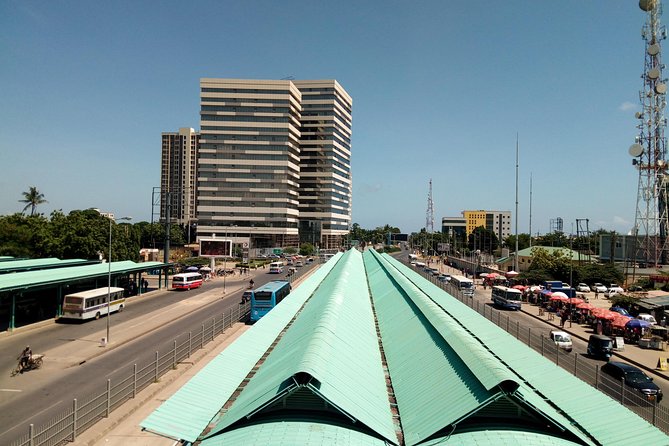
Public transport is included in the price, and it is one of the most distinctive features of the experience. Rather than moving only between attractions in a private vehicle, you ride a public bus and see how local transportation fits into daily life.
The bus ride adds a useful change of pace. It also shows you more of the city between scheduled stops, though it means the timing can be less predictable than on a private driving tour. The overall five to seven hour range likely allows for walking, explanations, and movement through the city rather than a tightly timed sequence.
This part suits you if you want a more direct connection with ordinary city routines. If you want air conditioning, fast transfers, and no uncertainty, a private car tour may be a better fit. Here, the transport is part of the experience, not just a way to get from one landmark to another.
Mwenge Curio Shops and the end of the route
Mwenge Curio Shops are included near the end of the listed route. The supplied schedule is cut off after the reference to this stop, so the exact amount of time there is not clear. You should view it as a final opportunity to browse local crafts rather than assume a long shopping session.
The stop can work well at the end because you have already seen museums, markets, churches, and historic buildings. You can compare the crafts with the wider city experience and decide if you want to shop.
Since the tour ends back at the meeting point, ask Aloys about the day’s timing if you have an evening flight, dinner reservation, or other fixed plan. The advertised duration is approximate, and traffic or public transport can affect the finish.
Heat, walking, and the fish market smell
The biggest practical issue is the weather. One participant from northern Europe found the heat difficult, and the tour provider has acknowledged that temperature can affect the experience. This is especially important because you are outside, walking, waiting, visiting markets, and using public transport for several hours.
Choose the coolest available start time if the booking offers a choice. Wear light clothing and comfortable walking shoes. Carry drinking water, even though lunch and dinner are not included. The tour details do not specify what refreshments are provided, so do not rely on the activity to supply them.
The fish market also deserves advance warning. It can be interesting and unpleasant at the same time. If you dislike strong smells, keep the stop in perspective: it lasts about 20 minutes, and it is one small part of a much broader day.
What the $100 price includes
The cost is $100 per person. That is not the cheapest way to see Dar es Salaam, but the value depends on how much you want from the day.
Your price includes all fees and taxes, as well as public transport. It also buys a private experience, which is important if you want personal attention from Aloys rather than a standard group narration. The route covers several types of sights that would be difficult to connect efficiently without local guidance.
Lunch and dinner are not included. Set aside extra money for your own meal, and do not confuse the half-day label with a brief three-hour outing. The schedule can run five to seven hours, so food planning matters.
I see the tour as good value for a first visit, especially if you want history and daily life in equal measure. It is less compelling if you only want one or two major attractions, dislike public transport, or prefer a short, air-conditioned sightseeing loop.
Who will enjoy this private city tour
I would recommend it most to first-time visitors who want a clear introduction to Dar es Salaam. It suits people who enjoy museums, historic buildings, markets, and learning how a city works.
The private format is also useful for couples, families, and small groups with different interests. You can ask more questions than you usually can on a large group outing, and Aloys can explain the places in front of you rather than reading a fixed script.
You should think twice if long walks in heat are difficult for you. The activity is described as suitable for most people, but that does not mean it is effortless. It includes walking, public transport, market conditions, and a full half-day of sightseeing.
The tour is also a good match if you want to avoid carrying a guidebook. Aloys provides the explanations as you go, including the city’s founding story and the meaning of the buildings and markets along the way.
Booking and cancellation details
Confirmation is received at booking, and the activity ends back at the meeting point. It is a private tour, so only your group participates.
You can cancel for a full refund up to 24 hours before the local start time. Cancellations or changes made less than 24 hours before the start are not accepted for a refund.
The activity is often booked well ahead, with an average booking lead time of about 55 days. That does not guarantee that every date will sell out, but it is sensible to reserve early if your schedule is fixed.
Should you book the Dar es Salaam walking tour?
Book it if you want to understand Dar es Salaam through its streets, markets, museums, churches, and public transport. Aloys Malekela’s friendly, attentive guiding is a major part of the appeal, and the private format gives the day a personal feel.
Skip it if you want a short, cool, highly polished sightseeing trip. The heat, the fish market smell, the walking, and the unpredictable pace of public transportation are real parts of the experience.
For the right visitor, the $100 price buys more than a list of landmarks. It gives you a working introduction to the city and a chance to see how history and daily life meet in central Dar es Salaam.
FAQ
Where does the Dar es Salaam walking tour take place?
The tour takes place in Dar es Salaam, Tanzania, within a walking area of roughly three to five kilometers, with regular stops for sightseeing and explanations.
How long does the tour last?
The activity lasts approximately five to seven hours.
Is this a private tour?
Yes. Only your group participates in the activity.
Who leads the tour?
The experience is provided by Aloys E Malekela, who guides the city walk and explains the places visited.
Which attractions are included?
The route includes the National Museum of Tanzania, Dar es Salaam Fish Market, Sultan Majjid Building, Missionaries House, Saint Joseph Church, Azania Front Church, Kariakoo Bazaar, and Mwenge Curio Shops.
Is public transportation included?
Yes. Public transport is included in the tour price, and the experience includes travel by public bus.
Is food included?
No. Lunch and dinner are not included.
Can I cancel for a full refund?
Yes. You can cancel at least 24 hours before the experience start time for a full refund. Changes or cancellations made less than 24 hours before the start are not accepted for a refund.
Just added around Dar es Salaam
- The Ultimate Guide for 2-Day Tanzania Safari from Mwanza★ 5.0 · 3 reviews
- 5 Days Tanzania Safari from Mwanza to Arusha★ 5.0 · 8 reviews
- Sunrise Beach Walk with Picnic Breakfast Activity★ 5.0 · 3 reviews
- Saadani National Park Day Tour★ 5.0 · 3 reviews
- Private Tour in Historical Dar es Salaam with Lunch★ 4.5 · 6 reviews
- Dar es salaam Airport Transfer (Private & Group)★ 3.5 · 7 reviews
- Dar es salaam Private City Tour with Professional Guide★ 5.0 · 5 reviews
- Full Day Private Tour in Dar es Salaam City★ 5.0 · 4 reviews
Walking Tours, compared.
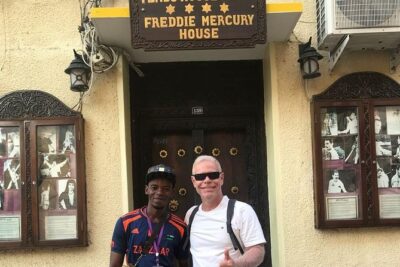

Stonetown: Food Markets and Street Food Walking Tour
Read our review →
Arusha Guided Walking City Tour, Culture, Lifestyle & History
Read our review →

Underwater Walking Experience in Zanzibar,No Swimming Needed
Read our review →

7-Day Private Tanzania Safari with Sunset Walking on the Crater Rim and Maasai
Read our review →Browse the lists this tour appears in