
Reviewed · 4-DAY EXPERIENCES
4 days safari
Tarangire’s elephants and baobab trees are only the opening act on this five-day northern Tanzania safari. From Arusha, you move through four major wildlife areas, with two nights devoted to the Serengeti and a final crater drive at Ngorongoro.
I like the small group limit of six, which makes it easier to ask questions and get a good view from the vehicle. I also like the range of scenery and wildlife, from Tarangire’s dry-country baobabs to the open plains of the Serengeti and the enclosed world of Ngorongoro Crater.
The main thing to check before booking is the naming. The tour is described as a four-day safari in places, but the itinerary clearly runs for five days. The camping style also suits people who want value and time in the parks, not people looking for polished lodge comfort.
Key points to know before booking
- Two full Serengeti days: The central Seronera area gives you more than a rushed drive-through visit.
- Four major wildlife areas: Tarangire, Serengeti, Ngorongoro Conservation Area, and Lake Manyara are all included.
- Groups capped at six: A smaller vehicle group can make wildlife viewing and conversation easier.
- Camping rather than lodges: Overnight stays are listed at budget or public campsites, including Simba and Panorama.
- Guides and cooks matter: Guides named in the trip material include Joel, Joseph, Jackson, and Joakim, while Joachim, also called Mr. D or Mr. Delicious, is praised for camp meals.
- $1,300 per person: The price includes park-related fees and listed meals, but not visas, personal costs, or tips.
Arusha to Tarangire, where the safari begins
Pickup is offered from your accommodation in Arusha, with the listed meeting point at Shoppers Supermarket. The first park is Tarangire National Park, in the Manyara region, and the drive and game viewing are planned to take about six hours.
Tarangire is a strong first stop because it gives you a very different setting from the Serengeti. The park is known for large elephant herds, baobab trees, and the Tarangire River. That river flows throughout the year, making it an important water source for wildlife during the dry season.
You may also look for tree-climbing lions, a feature specifically associated with the park. As always with wildlife, sightings are not guaranteed, but Tarangire gives you a good chance to see large animals in a setting marked by ancient-looking trees and open, dry country.
I like the way this first day eases you into the safari. You begin with a focused park visit rather than spending the entire day on a road transfer. The tradeoff is that a six-hour park day can feel long if you are not used to rough roads, early starts, and extended time in a safari vehicle.
The tour information lists admission tickets as free, but park and government charges are also described as included in the total price. Ask the operator to confirm exactly which entry fees are covered, since this wording can be confusing.
More Safaris in Arusha
- 4 Days Group Camping Safari
★ 5.0 · 1,101 reviews - 5 Days Group Camping Safari
★ 5.0 · 730 reviews - 7-Day Premium Luxury Tanzania Safari All-Inclusive
★ 5.0 · 426 reviews
Two nights in the Serengeti’s central Seronera area
After breakfast on Day 2, you drive toward Serengeti National Park and the central Seronera area. This is one of the most important parts of the trip, and giving it two days is a smart choice.
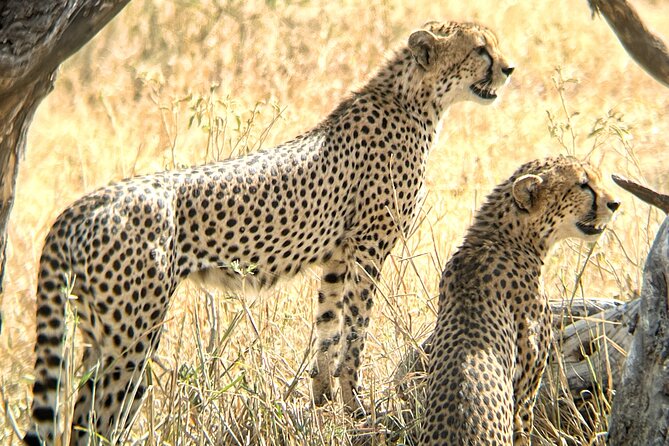
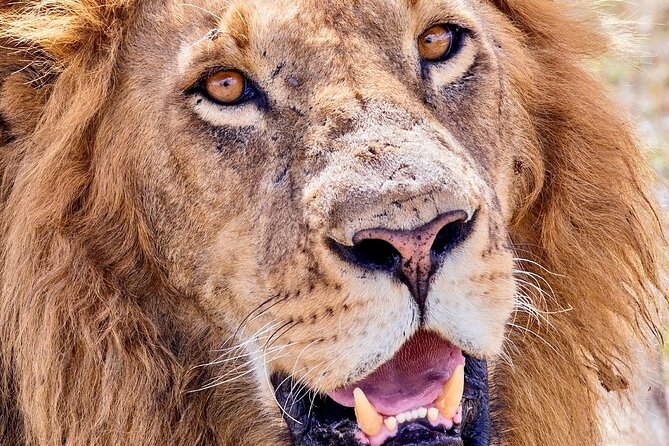
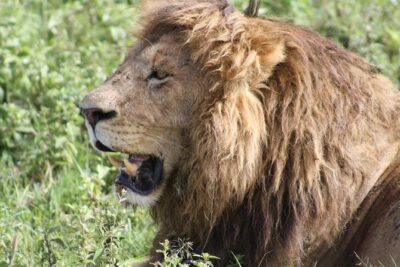
Seronera is described as a good area for resident wildlife, including lions and leopards. The Serengeti is also known for elephants, buffalo, and the other animals commonly grouped as the Big Five. Rhino sightings are less predictable, but the itinerary includes the chance to look for all five.
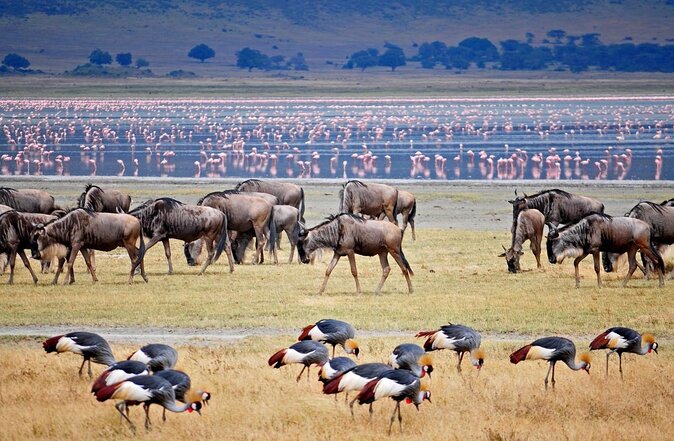
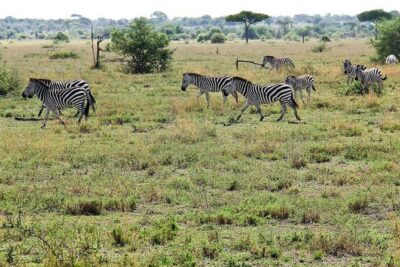
The Serengeti also forms part of the wider annual movement of wildebeest, zebra, and Thomson’s gazelle. The trip information gives approximate figures of 200,000 zebras and 300,000 Thomson’s gazelles, with these animals joining the wildebeest trek in search of fresh grazing.
That description points to an important planning fact: wildlife changes with season and location. You can see animals in the Serengeti year-round, but the location of the migration varies. This trip is not advertised as a migration-specific itinerary, so book it for the park as a whole rather than for a guaranteed river crossing or one particular event.
Your first Serengeti day combines the long approach from the Arusha area with game viewing. That can mean a full day in the vehicle, but it also allows you to begin seeing the park as soon as you arrive.
Day 3 is another Serengeti day, with an overnight stay listed at Simba Campsite. This extra time is one of the trip’s best features. You are not limited to a single game drive window, and your guide can spend more time looking for predators, herds, or smaller details in the grass and trees.
Several guides are associated with the company, including Joel, Joseph, and Jackson. Joel is repeatedly praised for placing the vehicle well for photographs and explaining animal behavior and plant life. Joseph is noted for answering a wide range of questions, while Jackson is described as adding useful facts and humor.
Those names do not mean you can select a particular guide automatically. Ask who will lead your departure and whether guide requests can be made before you pay. The quality of a safari depends heavily on the driver-guide, especially when roads are rough and wildlife sightings require patience.
Why two Serengeti nights improve the value
The Serengeti is a large park, and rushing through it can leave you with a lot of driving and too little time watching animals. Two nights in central Seronera give the itinerary room to breathe.
I especially like this part for people who care about more than checking a park off a list. A guide can stop to explain predator behavior, identify vegetation, or wait quietly near an animal instead of racing from one sighting to the next.
The small group limit also matters here. With no more than six people, there should be less competition for window space and fewer conflicting requests about where to stop. It is still worth confirming the vehicle arrangement, since the supplied details state the maximum group size but do not describe the vehicle model or seating layout.
Camping keeps the price below many lodge-based safaris, but it changes the feel of the trip. The listed accommodation is budget camping, Simba Campsite, and Panorama Campsite. You should expect a practical overnight setup rather than a private room with hotel-style services.
The supplied information also highlights cooks named Joachim, Mr. D, and Mr. Delicious. Their meals receive strong praise, and one five-day account specifically credits the food for making the long days easier. Ask what camping equipment, bedding, and shower facilities are provided, since those details are not stated here.
Ngorongoro Crater, a dramatic final wildlife day
On Day 4, you leave after breakfast for an early drive into the Ngorongoro Conservation Area. The plan includes a game drive in Ngorongoro Crater and an overnight at Panorama Campsite.
Ngorongoro Crater is the world’s largest caldera, according to the trip description. Its enclosed setting holds a high concentration of wildlife, with an estimated 25,000 animals. The crater’s scale and steep sides make this day visually different from the broad plains of the Serengeti.
The main advantage is variety in a compact area. You may have the chance to see several species without the long distances required in a huge open park. The crater is also a UNESCO World Heritage Site, adding cultural and environmental importance to the visit.
The drawback is timing. The itinerary calls for an early drive after breakfast and about six hours of activity. After two Serengeti days, you may feel tired, and the crater can be busy with other safari vehicles. The experience is still worthwhile, but this is not a quiet wilderness day by default.
A guide who can explain both wildlife and the crater’s geology adds real value here. Joel is praised for explaining animals and vegetation, while other guides named by the company include Joseph and Jackson. Confirm your guide before departure if interpretation is especially important to you.
The overnight at Panorama Campsite is practical because it keeps the route moving toward Lake Manyara. It also means you are still camping on the fourth night, so consider your comfort level carefully if you prefer a softer finish to a long safari.
More Arusha safaris to compare:
- 8 Days Great Wildebeest Calving Migration Safari from Arusha
★ 5.0 · 254 reviews - Group Safari 7 Days in Tanzania’s Main Parks
★ 5.0 · 240 reviews - Tanzania Simba Safari – 5 Days
★ 5.0 · 217 reviews - 5 Days Budget Private Safari, Tanzania
★ 5.0 · 191 reviews
Lake Manyara and the route back toward Arusha
On the fifth morning, you drive to Lake Manyara National Park, passing through a Maasai village. The park takes its name from the Maasai word Manyara, which refers to Euphorbia tirucalli, a plant used to make durable livestock enclosures.
This stop adds a cultural and botanical note to a trip otherwise centered on large parks and wildlife. The route also brings you into the Great Rift Valley, a huge geological fault system stretching from Turkey toward Mozambique. The valley is one of the most important physical features in East Africa.
The itinerary gives about six hours for Lake Manyara before taking you to a hotel in the afternoon. The timing makes this feel like a final park visit combined with a transfer day, not a full extra day in the park.
That distinction matters. If Lake Manyara is your main reason for booking, ask how much time will actually be spent inside the park and whether the Maasai village visit is included in the price. The supplied details name both stops but do not explain the length of the village visit or the hotel used afterward.
Lake Manyara is a useful final stop because it breaks up the return journey and adds a different setting to the safari. Still, the first four days carry the main wildlife weight, especially Tarangire, Serengeti, and Ngorongoro.
What $1,300 includes, and what it does not
At $1,300 per person, this is best judged as a budget camping safari covering four major wildlife areas over five days. The price includes listed fees and taxes, four breakfasts, five lunches, and four dinners.
The meal count matches the overnight structure more or less, but it is worth checking the details. The itinerary labels Day 4 as breakfast, lunch, and dinner, while the inclusions list four dinners and four breakfasts. Ask which meals are provided on the final day and where they are served.
Tips and personal expenses are not included. Visas are also excluded. You should budget for guide and cook gratuities, drinks or snacks not supplied by the company, and anything bought during village or roadside stops.
The value is strongest if you want extensive park time, a small group, and camping at a lower cost than a lodge itinerary. It is weaker if you want private rooms, a slower schedule, or certainty about a specific named guide.
The company’s wider offering also includes Kilimanjaro trips and hostel stays, and the safari can be combined with other services. That may help if you are building a longer Tanzania visit, but do not assume those extras are part of this price.
The guides, cooks, and human side of the trip
A safari vehicle is only as good as the people running it. The strongest names connected with this experience are Joel, Joseph, Jackson, and Joakim, with Joachim also referred to as Mr. D or Mr. Delicious in the trip accounts.
Joel is especially associated with knowing the parks well, finding strong viewing positions, and explaining animals and plants. Joseph is praised for answering questions and helping people feel safe. Jackson is described as friendly and full of useful facts.
The cook is just as important on a camping trip. Joachim’s food receives repeated praise, including from people who took longer multi-day trips. Good meals do not change the road conditions, but they can make a basic campsite feel much more comfortable.
The owner, Ally, is described as making the booking process easy and as warm and welcoming. The company is also connected with support for a school serving children with special needs. If that social purpose matters to you, ask how the contribution works and whether it is part of this specific booking.
Who should book this safari
I would recommend this trip to you if you want to see several of northern Tanzania’s major wildlife areas without paying lodge-safari prices. It also suits first-time safari visitors who want a broad introduction, since the route includes elephants, predators, crater wildlife, Rift Valley scenery, and a Maasai village stop.
It is a good fit for active people who can manage long drives and basic camping. The maximum group size of six is helpful for couples, friends, and solo visitors who want company but do not want a large coach-style tour.
I would be more cautious if you need guaranteed access to a named guide, private accommodation, or a short amount of driving each day. The itinerary is ambitious, and the stated six-hour days do not fully capture the fatigue that can come from park roads and inter-park transfers.
Pickup is offered, and the listed meeting point is Shoppers Supermarket in Arusha. Confirmation is provided at booking, and most people can participate, but the supplied information does not give detailed mobility guidance. Ask directly if you have mobility, medical, or dietary needs.
Cancellation is free up to 24 hours before the start time for a full refund. Within 24 hours, payment is not refunded, and the operator may offer a new date or another experience if the minimum number of participants is not reached.
Should you book the Making Memories in Africa safari?
Book it if your priority is maximum park variety for the price, two nights in the Serengeti, and a small camping group with guides who can add real natural-history detail. The combination of Tarangire, Serengeti, Ngorongoro, and Lake Manyara gives you a strong first look at northern Tanzania.
Before paying, clarify three things: why the product is sometimes called four days when it runs for five, which guide and cook will lead your departure, and exactly what camping equipment and meals are supplied. If those answers suit you, $1,300 is a reasonable price for a demanding but wide-ranging safari.
FAQ
How long is the safari?
The itinerary runs for five days, although the experience is sometimes described as a four-day safari. Confirm the exact duration with the operator before booking.
Where does the safari start?
Pickup is offered from accommodation in Arusha. The listed meeting point is Shoppers Supermarket in Arusha, Tanzania.
How many people can join the safari?
The maximum group size is six travelers.
Which parks and conservation areas are included?
The route includes Tarangire National Park, Serengeti National Park, the Ngorongoro Conservation Area, and Lake Manyara National Park.
How many nights are spent in the Serengeti?
The itinerary includes two Serengeti days, with overnight stays listed at budget camping and Simba Campsite.
Where are the other overnight stays?
The itinerary lists budget camping in the Serengeti, Simba Campsite, and Panorama Campsite near the Ngorongoro portion of the route. The final afternoon includes transfer to a hotel.
Are meals included?
Yes. The inclusions list four breakfasts, five lunches, and four dinners. Ask the operator to confirm the meal schedule because the day-by-day details and inclusion list use slightly different counts.
Are park fees included?
All fees and taxes are listed as included. The description also labels admission tickets as free, so confirm the exact park and government charges covered by the $1,300 price.
Are tips and visas included?
No. Tips for the driver-guide and safari cook, visas, and personal expenses are not included.
What is the cancellation policy?
You can cancel at least 24 hours before the start time for a full refund. Cancellations or changes made within 24 hours are not refunded or accepted.
More Four-Day Trips in Arusha
- 4 Days safari Tour Tanzania
★ 5.0 · 159 reviews - 4 Days Mount Meru Trekking
★ 5.0 · 55 reviews - 4 days safari in Tanzania
★ 5.0 · 49 reviews - 4-Day Simba Safari – Mid Range Tour
★ 5.0 · 47 reviews
Just added around Arusha
- From Arusha: 11 days The Classics Northern Tanzania safari★ 5.0 · 11 reviews
- 6-Day Mount Meru Climb through Momella Route Guided Tour★ 5.0 · 5 reviews
- Private Day Trip to Arusha National Park with a Walking Safari★ 5.0 · 4 reviews
- From Arusha : 11-day Amazing North Tanzania safari tour★ 5.0 · 4 reviews
- Walking Day Tour to Safari in Arusha National Park★ 5.0 · 5 reviews
- 2 Days Tanzania Midrange Group Join Safari★ 5.0 · 7 reviews
- Best 5 Days Tanzania Private Luxury Safari with luxury Lodges★ 5.0 · 12 reviews
- Waterfall & Coffee Walking Tour★ 5.0 · 6 reviews
4-Day Experiences, compared.
4 Days Join Group tour Tarangire Serengeti and Ngorongoro crater
Read our review →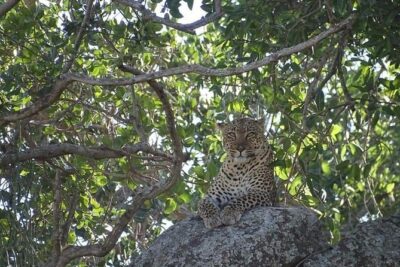
4-Day Safari from Arusha: Tarangire, Serengeti and Ngorongoro
Read our review →
4 days Best experience Kilimanjaro Hike, Serengeti &Ngorongoro
Read our review →
4 Days lodge safari Tarangire , Ngorongoro crater & Walking
Read our review →Browse the lists this tour appears in