
Reviewed · COFFEE TOURS
Coffee walk day trip
Arusha’s coffee story begins on foot. This private half-day trip takes you from a village center through small farms, schools, and churches to an organic Fairtrade coffee farm, then on to a roaster and garden lunch. It gives you a clear look at the work behind your morning cup, not just a quick tasting at a café.
I like the personal guide service, especially with Samwel, also identified as Samuel, who has worked with the coffee walk for more than 10 years. I also like the generous food lineup, from chapati and roasted banana to ugali, goat sauce, spinach, salad, fruit, coffee tasting, and banana cake. The main consideration is the walking: expect a 30 to 40 minute walk between the farm and roaster, along with village paths that may not suit anyone seeking a mostly seated outing.
Key points to know before you book
- The coffee village is about 40 minutes from Arusha town, at roughly 1,400 meters, with an evergreen setting.
- The walk is part of the tour, passing small farms, schools, churches, and village life before reaching the coffee fields.
- The farm is organic and Fairtrade, giving the coffee story a human and practical focus.
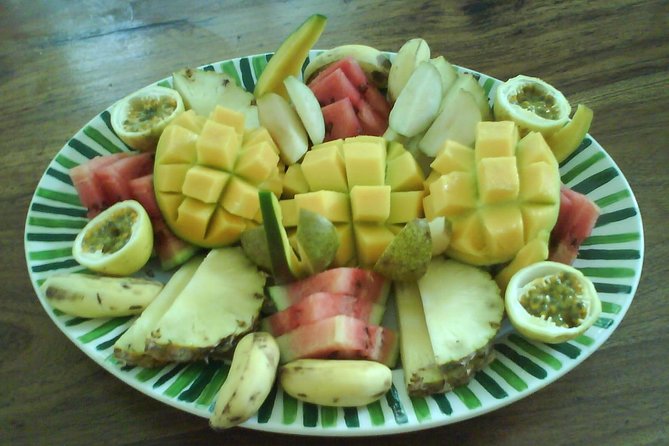
- Lunch is a full Tanzanian meal, including chapati, ugali, goat sauce, roasted banana, vegetables, salad, and seasonal fruit.
- You will taste several coffees and receive a bag to take home, with more coffee available to buy.
- The tour is private, so only your own group participates, with pickup offered and group discounts available.
Why this coffee walk is different from a tasting stop
Many coffee activities reduce production to a few beans, a machine, and a small cup. This one puts the cup at the end of a walk through the community that supports it. You begin at the village center, then follow your guide on foot through small farms, past schools and churches, and toward the coffee-growing area.
That route matters. You get a sense of how coffee fits into everyday life, alongside other small-scale farming and local institutions. The tour is not only about the crop. It also opens a window onto local culture and traditions, which your guide explains as you walk.
I especially like that this is a private activity. Your group does not have to keep pace with a large crowd or wait for a dozen people to finish every stop. It also gives you a better chance to ask direct questions about farming, roasting, and village life.
The tour runs for about six and a half hours, beginning at 9:00 a.m. That makes it a substantial morning and early afternoon outing rather than a quick add-on. You should plan your day around it, especially if you have another scheduled activity in Arusha.
More Coffee Tours in Arusha
- Arusha or Moshi : Hot Spring, Waterfall & Coffee Farm Tour
★ 4.8 · 80 reviews - Arusha: Materuni Waterfalls, Coffee, and Hotsprings Tour
★ 4.8 · 78 reviews - Coffee tour and Buffet Lunch with Kingstone Asilia (Arusha)
★ 5.0 · 74 reviews
Reaching the coffee village from Arusha
The coffee village is about 40 minutes from Arusha town. Pickup is offered, and the meeting time is 9:00 a.m. The route takes you away from the town center and into a higher area at around 1,400 meters, described as evergreen.
The drive is useful context before the walking begins. You are not simply being dropped at a polished farm attraction. The activity starts in a village center, where the surrounding homes, farms, schools, and churches help show the setting in which coffee production takes place.
The supplied information does not give a fixed pickup schedule or specify the exact pickup zone, so you should confirm those details when booking. Public transportation is nearby, but pickup is the simpler choice if it is available for your location.
Because the activity begins at 9:00 a.m. and lasts around six and a half hours, a hotel pickup can make the morning easier. The tour provider is Wild Tracks/Kahawa Coffee Walks, and the private format means the timing applies to your group rather than a large shared departure.
Walking through farms, schools, and churches
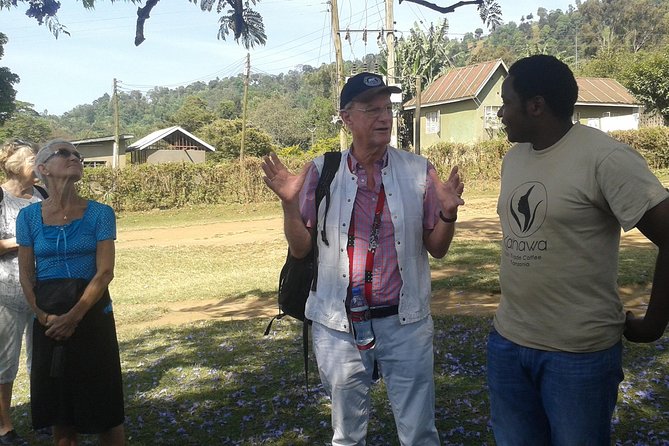
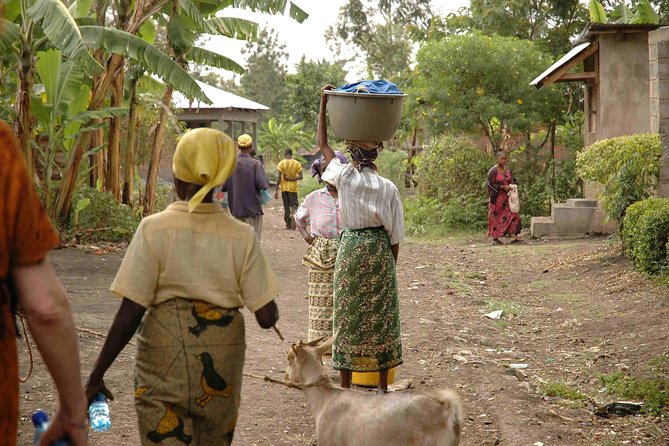
From the village center, you walk to the organic coffee farm. This is not a long wilderness hike, but walking is central to the experience. Your route passes small farms, schools, and churches, with your guide explaining local customs and traditions along the way.
I see this as one of the tour’s strongest features. A vehicle can get you to a farm quickly, but it also hides the connections between the farm and the surrounding community. On foot, you have time to notice how coffee production sits beside other forms of small-scale agriculture.
The guide identified in the information is Samwel, also written as Samuel. He has worked with the coffee tour for more than 10 years. That length of experience is useful here because the walk combines several subjects: coffee, farming, village life, and culture.
You should wear comfortable walking shoes and bring water, even though the activity is described as suitable for most people. The tour data does not give a distance for the walk from the village to the farm, so you should think of the day as an active outing rather than a simple farm visit.
Seeing organic and traditional coffee production

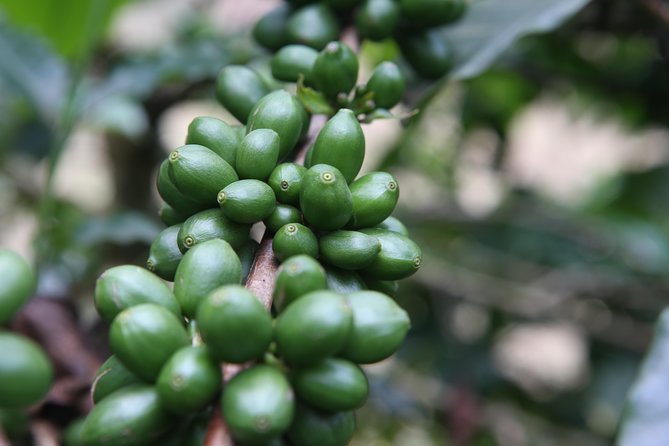
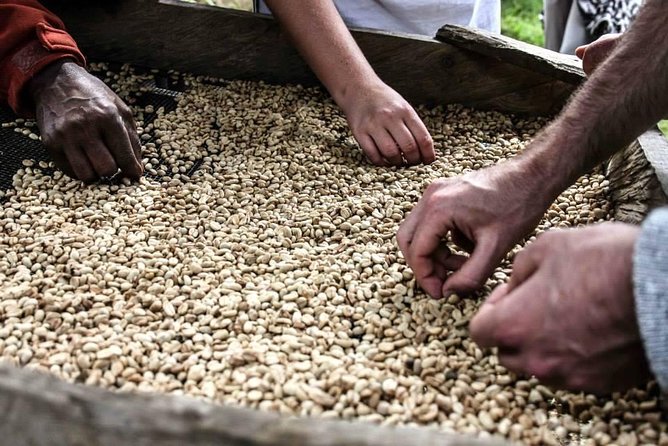
At the farm, the focus turns to coffee production. You learn how coffee is grown and manufactured, and you see the difference between traditional and organic production.
That comparison gives the visit more substance than a basic explanation of how beans are roasted. It lets you consider the work involved in different farming methods and how the choices made in the field affect the final drink.
The Fairtrade and organic labels are also important to the tour’s value. They connect the coffee in your cup with the livelihoods of the people producing it. The activity presents coffee as a local economy, not just an export crop or souvenir.
The information does not provide a step-by-step list of every farming or processing stage, so you should not expect a technical coffee-school course. Instead, the strength is the combination of a farm visit, a guide’s explanation, and a walk through the nearby community.
For anyone who drinks coffee every day, this is a useful change of scale. You move from the finished beverage back to the people, land, and work behind it.
More Day Trips in Arusha
- Arusha National Park Day Trip
★ 4.5 · 18 reviews - Saadani Day Trip
★ 5.0 · 13 reviews - 1 Day Olpopongi Real Maasai Cultural adventurous Trip | BURIGI CHATO SAFARIS LTD
★ 4.5 · 13 reviews - Arusha: Day Trip to Serval Wildlife – Feed Giraffes & Lions
★ 4.8 · 10 reviews
Walking down to the roaster
After the farm visit, the walk to the roaster takes about 30 to 40 minutes. The wording describes this as a walk down to the roaster, so expect a change in elevation rather than a level stroll.
This section is worth noting before you book. The 30 to 40 minutes may sound modest, but the surface and slope are not described in detail. If you have knee, balance, or mobility concerns, ask the provider for current information before paying.
For most participants, the walk helps the day feel connected. You see the coffee at the farm, then follow the process toward roasting. The activity is built around that movement from crop to finished product, rather than placing every part of the lesson in one room.
The private setup should also make this part less rushed. Your guide can keep the pace suited to your group, within the limits of the scheduled day. Still, this is not the right choice if you want a vehicle-based tour with very little walking.
A garden lunch filled with Tanzanian staples
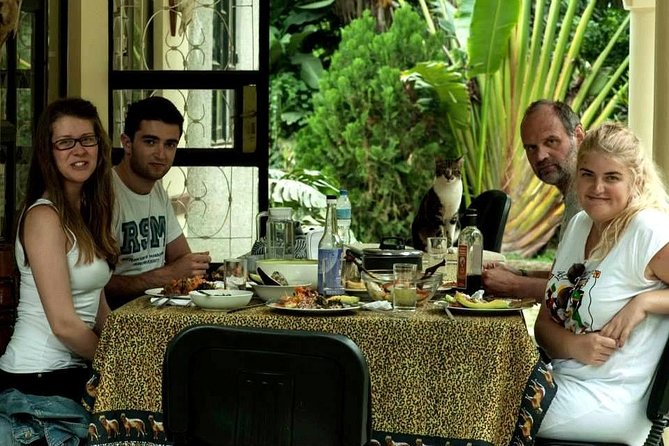
The meal is served in a garden near the roaster and features traditional Tanzanian dishes prepared by local villagers. The spread includes chapati, roasted banana, rice, ugali, goat sauce, spinach, salad, and seasonal fruit.
This is more than a snack between stops. You get a proper meal, and the range of dishes gives you a useful introduction to everyday Tanzanian food. Chapati provides a familiar flatbread, while ugali offers a staple made from maize. Roasted banana and seasonal fruit add local flavor to the meal.
Goat sauce is included, which may be a new taste for some people. The menu also includes spinach and salad, so the meal is not built around meat alone. Since the information does not address dietary substitutions, tell the provider about food restrictions when booking rather than assuming alternatives will be available.
The garden setting sounds pleasant, but do not read that as a formal restaurant experience. This is a village meal connected to the coffee walk. The appeal is the local preparation and the chance to eat after seeing where the coffee is produced.
The meal also gives the day a natural pause. After the village walk and farm visit, you can sit down, eat, and discuss what you have seen before the final coffee tasting.
Coffee cupping, banana cake, and a bag for home
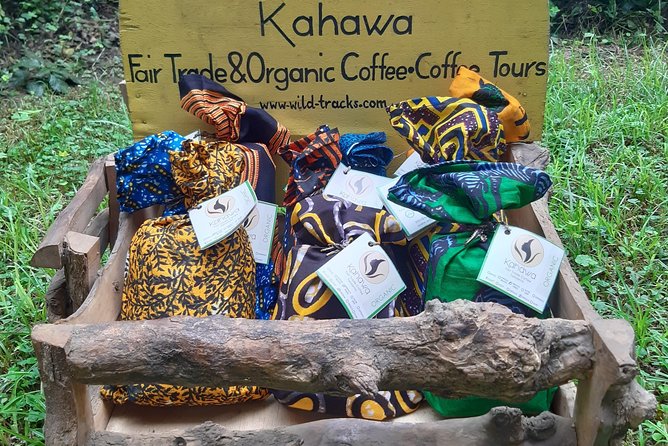
Dessert includes a tasting of different coffees, the tour’s famous banana cake, and more coffee. The word cupping refers to tasting coffees side by side, which allows you to compare them rather than simply drink one cup without context.
This is the moment when the earlier farm visit comes together. You have seen the growing area, learned about organic and traditional production, walked to the roaster, and then tasted the finished product.
You also receive a bag of coffee to take home. More coffee is available for purchase, making this a practical stop if you want a souvenir that you will actually use. Coffee is easier to pack than many bulky crafts, and each cup later can bring back the memory of the village walk.
I like that the souvenir is built into the experience rather than treated as an afterthought. Still, check how much coffee is included and what additional bags cost if that matters to your budget. Those details are not provided.
The banana cake adds a sweet finish to the tasting. It also keeps the end of the visit from feeling too technical or formal. You get a chance to enjoy coffee as food and hospitality, not only as a production subject.
What the $102 price buys you
At $102 per person, this is not the cheapest way to drink coffee in Arusha. The value depends on what you want from the day.
You are paying for about six and a half hours, a private tour, a guide, the village and farm walk, instruction about coffee production, lunch, coffee tasting, and a bag of coffee to take home. Pickup is offered, and group discounts may improve the price for larger parties.
The private format is the key value point. If you are traveling as a couple, family, or small group and prefer a relaxed pace, a private activity can justify a higher price than a shared farm visit. You get direct access to the guide and avoid a large group setting.
The meal also adds real value. A full Tanzanian lunch with several dishes is more substantial than the small tasting plate often served on food-focused outings. The included coffee bag makes the experience feel less like a single afternoon expense and more like a farm visit with a useful take-home item.
On the other hand, the price may feel high if your only goal is to see coffee plants or buy a bag of beans. You are paying for the complete walking route, cultural explanation, meal, tasting, and private organization. If you do not care about walking or local food, the package loses some of its appeal.
Who will enjoy this six-hour outing
I would point this tour toward coffee drinkers, food-focused visitors, and anyone who prefers meeting a community through a working local activity. It also suits people who want a private day with a clear structure but without a large group.
The tour is a good fit for you if you like:
- Walking through rural areas rather than moving only by vehicle
- Learning how a common product is grown and processed
- Eating traditional food in a local setting
- Asking questions directly to a guide
- Bringing home a practical souvenir
- Spending most of a day on one focused experience
It is less suitable if you want a short stop, a fully seated tour, or a highly technical coffee course. The walking is not incidental. The route from the village to the farm and the 30 to 40 minute walk to the roaster shape the whole day.
Most people can participate, according to the supplied tour information, but no detailed accessibility description is provided. If stairs, slopes, uneven paths, or longer walks are a concern, contact Wild Tracks/Kahawa Coffee Walks before booking.
Booking details and cancellation
The activity begins at 9:00 a.m., lasts approximately six hours and 30 minutes, and is offered as a private experience. Confirmation is received at booking, and mobile tickets are available.
Free cancellation applies when you cancel at least 24 hours before the local start time. If you cancel less than 24 hours ahead, the amount paid is not refunded, and changes made inside that 24-hour window are not accepted.
Pickup is offered, and the area is near public transportation. Since the exact pickup arrangements are not provided, confirm where and when you will be collected before the day of the tour.
Should you book the Arusha coffee walk?
Book this if you want to connect coffee with the people and farms that produce it. The best parts are the village walk, the comparison of organic and traditional production, the private guide service with Samwel or Samuel, and the substantial Tanzanian lunch.
The $102 price makes the most sense for a private group that values time, food, and a full local outing. I would skip it if you want only a quick tasting or if a 30 to 40 minute walk sounds uncomfortable.
For the right visitor, this is a practical and satisfying day: you learn how coffee is made, eat well, meet the process on foot, and return with a bag of beans for later.
FAQ
Where does the coffee walk take place?
The coffee village is in the Arusha Region, about 40 minutes from Arusha town, at approximately 1,400 meters.
What time does the tour start?
The tour starts at 9:00 a.m.
How long does the experience last?
The experience lasts approximately six hours and 30 minutes.
Is this a private tour?
Yes. Only your own group participates in the activity.
Is pickup available?
Yes. Pickup is offered, and the area is also near public transportation.
How much walking is involved?
The activity includes a walk from the village center to the organic coffee farm and a 30 to 40 minute walk down to the roaster.
What food is served?
The Tanzanian lunch includes chapati, roasted banana, rice, ugali, goat sauce, spinach, salad, and seasonal fruit. Dessert includes coffee tasting and banana cake.
Can I cancel for a full refund?
Yes, if you cancel at least 24 hours before the experience start time. Cancellations made less than 24 hours ahead are not refunded, and changes within that period are not accepted.
More Walking Tours in Arusha
- Arusha Guided Walking City Tour, Culture, Lifestyle & History
★ 5.0 · 150 reviews - Arusha; Walking City Tour History, Culture & Lifestyle
★ 4.9 · 63 reviews - 7-Day Private Tanzania Safari with Sunset Walking on the Crater Rim and Maasai
★ 5.0 · 40 reviews - Tanzania – Arusha NP – Private Guided 4×4 Safari – Game Drive & Walking
★ 5.0 · 30 reviews
Just added around Arusha
- From Arusha: 11 days The Classics Northern Tanzania safari★ 5.0 · 11 reviews
- 6-Day Mount Meru Climb through Momella Route Guided Tour★ 5.0 · 5 reviews
- Private Day Trip to Arusha National Park with a Walking Safari★ 5.0 · 4 reviews
- From Arusha : 11-day Amazing North Tanzania safari tour★ 5.0 · 4 reviews
- Walking Day Tour to Safari in Arusha National Park★ 5.0 · 5 reviews
- 2 Days Tanzania Midrange Group Join Safari★ 5.0 · 7 reviews
- Best 5 Days Tanzania Private Luxury Safari with luxury Lodges★ 5.0 · 12 reviews
- Waterfall & Coffee Walking Tour★ 5.0 · 6 reviews
Coffee Tours, compared.
Materuni Waterfalls, coffee tour & Kikuletwa Hot Springs
Read our review →
Materuni Waterfall, Coffee Tour and Picnic Hot Lunch
Read our review →
Maasai village visit, Materuni waterfalls & coffee experience
Read our review →
Arusha or Moshi : Hot Spring, Waterfall & Coffee Farm Tour
Read our review →
Coffee tour and Buffet Lunch with Kingstone Asilia (Arusha)
Read our review →
Materuni Waterfalls, Visiting Chagga Village, CoffeeTour Kikuletwa Hotsprings
Read our review →
6 Days Serengeti Safari(hiking waterfalls &coffee tour)
Read our review →
Hidden Arusha Waterfall, Coffee & Village Tour (All-Inclusive)
Read our review →Browse the lists this tour appears in