Reviewed · ARUSHA TOURS
5 Days_Haking_Mount_Kilimanjaro by_Using_Marangu Route
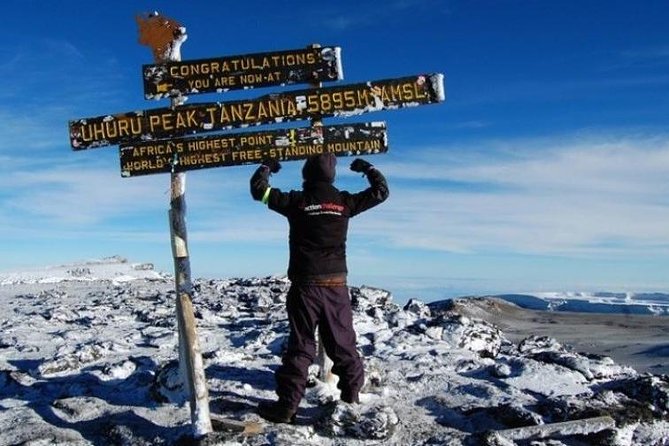
The Marangu Route gives you Kilimanjaro with a roof over your head every night. Instead of tents, you sleep in communal huts with bunks, foam mattresses, pillows, and solar lights. That makes this five-day climb more approachable, especially if you do not fancy camping at altitude. Uhuru Peak, at 5,895 meters, is the prize.
I like the hut system and the route’s changing scenery, from colobus monkeys in the forest to giant lobelias and the bare saddle between Mawenzi and Kibo. I also like that the price includes park and rescue fees, guides, food, purified water, transfers, and hotel nights. The main concern is the short schedule: five days leaves little time to adjust to altitude, and the summit day is long, cold, and demanding.
Key points before you book
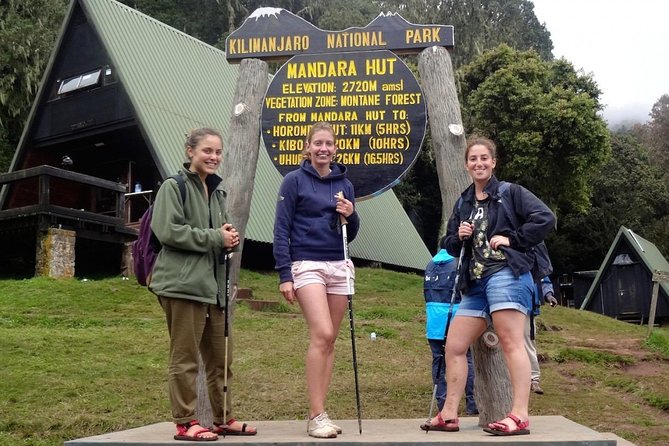
- Huts replace tents: You sleep in shared bunk rooms at Mandara, Horombo, and Kibo, with basic but useful bedding.
- The summit push starts at 2:00am: Expect a steep climb through scree or snow before reaching Gilman’s Point and Uhuru Peak.
- The scenery changes fast: Rainforest, open moorland, giant plants, volcanic desert, and crater-rim views all appear on the climb.
- The route is private for your group: You climb with your own booked party, but the huts and dining rooms are shared with other climbing groups.
- Altitude is the serious issue: The itinerary moves quickly from Mandara to Horombo, Kibo, and the summit with no dedicated acclimatization day.
- Bring small Tanzanian bills: Drinks, bottled water, and beer may be sold at huts, with prices rising as you gain height.
Why Marangu feels different from other Kilimanjaro climbs
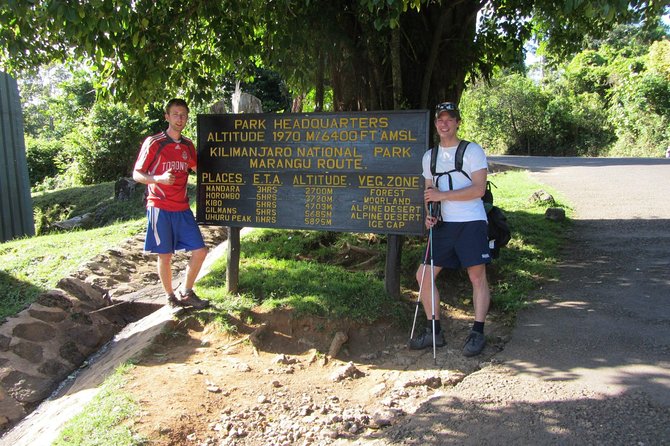
Marangu is often called the Coca Cola Route, partly because it is seen as the easiest and shortest way up Kilimanjaro. The label can mislead you. The trail may be less rugged in places, but the mountain is still nearly 6,000 meters high, and the summit attempt is hard work.
The real advantage is sleeping indoors. At Mandara and Kibo Huts, there are 60 beds each. Horombo has 120 beds. The rooms are communal, and the bunk beds come with a foam mattress and pillow. Solar lighting is available, so you are not packing and unpacking a tent in darkness.
This setup saves energy and makes bad weather less unpleasant. It also means less privacy. You share sleeping quarters, dining areas, and the general noise of a busy mountain route. Bathrooms and running water are available at the two lower huts. At the final camp, expect only basic men’s and women’s latrines.
Your climbing group is private, but the mountain experience is not completely private. You will share meals in dining huts with groups from different countries. That can make the evenings friendly and lively, though it may also feel crowded.
A few more Arusha trips worth comparing
- Tanzania Classic – 7 Days
★ 5.0 · 1,151 reviews - 4 Days Group Camping Safari
★ 5.0 · 1,101 reviews - 5 Days Group Camping Safari
★ 5.0 · 730 reviews
Day 1: From Arusha to Mandara Hut
After breakfast and a briefing, the drive to Kilimanjaro National Park’s gate takes about 45 minutes. Registration comes first. Then you begin walking through the rainforest toward Mandara Hut, at about 2,740 meters.
This is a pleasant first day because the forest gives you shade and plenty to watch. Keep an eye out for tall eucalyptus trees, bird life, and colobus monkeys. You are not yet in the stark high-altitude world shown in many Kilimanjaro photographs. The first day is greener, softer, and often more relaxed.
A side trip to Maundi Crater is worth considering. It gives you a wider view toward northern Tanzania and Kenya, and it is a good way to see the country around the mountain rather than simply staring at the trail. Ask your guide about the timing before adding it, since every extra walk matters on a climb where pacing is important.
The first night at Mandara introduces you to communal hut life. The beds are basic but welcome. Solar lights are useful, and the dining hut gives you a chance to meet the other groups using the route.
Day 2: Mandara’s forest gives way to Horombo moorland
The trail leaves the rainforest and climbs into open moorland on the way to Horombo Hut. The itinerary gives this section about five hours, though it also describes roughly one hour of walking in one part of the day. Treat the timing as an estimate. Pace, weather, stops, and group fitness will shape the actual day.
The views open up as you gain height. Mawenzi and Kibo, the two main volcanic peaks of Kilimanjaro, become strong reference points. The plants change too. Giant lobelias and groundsels give the trail a distinctly high-mountain look.
This is often when altitude becomes noticeable. You may feel your breathing change, your legs slow down, or your appetite shift. The best approach is simple: walk slowly, drink the purified water provided, and tell your guide early if you feel unwell. Trying to prove you are strong is not useful here.
Horombo is the one place where an extra night would help. You can rest there or take a walk toward the smaller peak of Mawenzi. The supplied schedule does not include that extra acclimatization day, so adding one would change the trip from five days to a longer climb. That extra time may make the summit attempt more manageable, but you would need to arrange it before booking.
Day 3: Across the saddle to Kibo Hut
The third day takes you toward the final camp. You pass the last water point and cross the broad saddle between Mawenzi and Kibo. The upper heathland gradually disappears, leaving a bare volcanic scene often described as moonscape.
This is one of the most memorable sections because the mountain feels much larger and more exposed. There is little visual distraction. You are walking toward Kibo, thinking about the night ahead.
Kibo Hut sits at about 4,750 meters. Dinner comes before rest, and the goal is to prepare for the summit start. The schedule allows about six hours for this day, but the practical challenge is not just walking. You must eat, drink, organize your clothing, and try to sleep before the 2:00am departure.
Your clothing should be easy to reach in the dark. Keep warm layers, gloves, head protection, rain gear, and water close at hand. The information provided does not list a personal equipment checklist, so you should ask Three Peaks Tanzania Safari for its current packing advice before departure.
Same corner of Arusha, a completely different kind of day:
- 7-Day Premium Luxury Tanzania Safari All-Inclusive
★ 5.0 · 426 reviews - Tanzania Wildlife Encounters – 6 Days
★ 5.0 · 277 reviews - 8 Days Great Wildebeest Calving Migration Safari from Arusha
★ 5.0 · 254 reviews - Group Safari 7 Days in Tanzania’s Main Parks
★ 5.0 · 240 reviews
Day 4: The 2:00am climb to Uhuru Peak
Summit day is the heart of the trip and the part that demands the most from you. You leave Kibo Hut around 2:00am and climb steep, loose scree or snow toward Gilman’s Point on the crater rim.
The climb to Gilman’s Point is estimated at four to seven hours. The slow pace is not a sign of failure. At this height, every step costs more effort, and your guide’s job is to keep the group moving safely and steadily.
From Gilman’s Point, you continue along the crater rim toward Uhuru Peak. The final section takes another one to two hours. At 5,895 meters, Uhuru Peak is the highest point in Africa. The view and the sense of distance can be extraordinary, but you may also be cold, tired, and short of breath. Take your summit photograph, but do not linger longer than your guide recommends.
Past departures have involved guides named Gabriel and Rafael, with Gabriel specifically associated with a summit climb. The available feedback also highlights patience, humor, positive support, and plentiful food from the wider team. Those details matter on summit day. You need calm guidance more than grand speeches.
After the summit, you descend to Kibo for lunch and a rest, then continue to Horombo Hut for dinner and the night. This is a long day, despite the listed walking time of about six hours. The summit ascent, return to Kibo, and onward descent make it the most tiring section of the route.
Day 5: A long descent through forest to Marangu
The final morning begins with breakfast and a steady descent through moorland to Mandara Hut, at about 2,700 meters. From there, you continue down through lush forest on a good path to the Marangu park gate, at about 1,830 meters.
The lower trail can be wet and muddy. Gaiters and trekking poles are useful here. You may be warm enough for shorts and a T-shirt at lower elevations, but keep rain gear and warmer clothing within reach because conditions can change as you walk.
A vehicle meets you at Marangu village and takes you back to your hotel in Moshi or Arusha. The included arrival and departure transfers are valuable after a summit climb, when arranging a taxi yourself is the last thing you want to do.
The day is also a good time to remember the porters and guides. Tips are not included, so bring a plan for tipping and ask the operator about its current guidance. The climb depends heavily on the mountain crew, from carrying equipment to preparing meals and keeping the group on schedule.
Food, water, and hut life
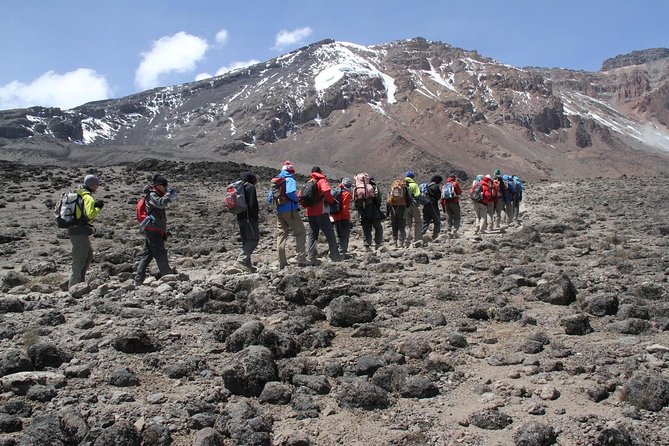
The package includes breakfast, lunch, and dinner for the listed five-day period, along with clean, purified drinking water. The food is described as nutritious and plentiful. That is important because you burn energy every day, yet altitude can make eating less appealing.
Dining huts are shared. You may find soft drinks, bottled water, and beer for sale at the camps. Carry small Tanzanian notes if you want to buy them. Prices rise with elevation, which is normal when supplies must be carried farther up the mountain.
Do not assume the huts offer every comfort. Beds and solar lights are provided, but bathrooms become very basic at the final camp. Running water is available at the lower huts, not necessarily throughout the upper sections.
What the $1,809.50 price covers
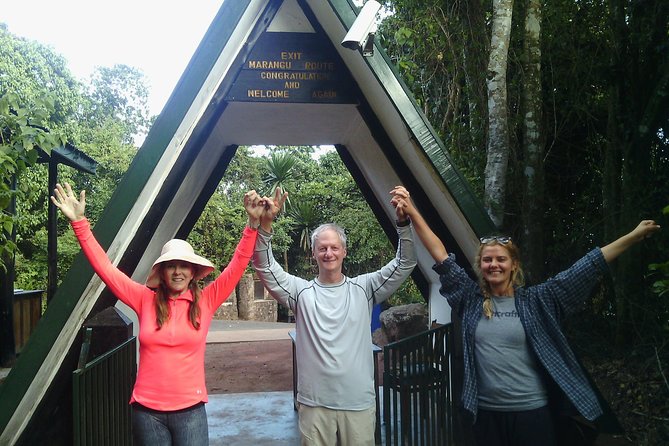
At $1,809.50 per person, this is not a budget day hike. The price needs to be judged against what is included: park fees, rescue fees, guides, arrival and departure transfers, purified drinking water, five breakfasts, five lunches, five dinners, and two hotel nights.
Those inclusions remove several large costs from your planning. Park and rescue charges alone are significant on Kilimanjaro, and transport after the descent is especially useful. The two hotel nights also give you a place to recover before or after the mountain portion.
Tips and international flights are not included. You should also clarify the exact hotel arrangements, the airport transfer timing, and the current tipping recommendation before paying. The description uses both Arusha and Moshi in its transfer details, so confirm where your hotel pickup and return will take place.
The price is strongest for someone who wants a managed climb with hut accommodation and a private group. It is less attractive if you want a slower acclimatization schedule, extra time at Horombo, or a more secluded route.
Who should choose this five-day climb
This trip suits you if you want Kilimanjaro without camping and prefer a compact schedule. It also works well if you value having guides, meals, park fees, rescue fees, and transfers arranged in one package.
You need a moderate level of physical fitness. The route is called the easiest and shortest, but that does not remove the altitude problem. The summit day begins in the middle of the night and includes a steep ascent, a descent to Kibo, and then a further walk to Horombo.
I would be cautious about choosing this schedule if you know you adjust slowly to altitude. The supplied plan offers an optional extra day at Horombo, but it is not part of the basic five-day program. Ask about adding it if you prefer a better-paced climb.
The route also suits people who enjoy meeting others along the way. Your booked group is private, yet meals and hut areas are shared. If solitude is your priority, this may not be the best route.
Booking details and cancellation
Confirmation is provided at booking, and the activity is private for your group. Free cancellation is available if you cancel at least 24 hours before the local start time. A cancellation within 24 hours is not refunded, and last-minute changes are not accepted.
The experience is operated by Three Peaks Tanzania Safari Ltd. Names connected with past departures include chief Gabriel, Rafael, and Mary, who handled an airport welcome on one trip. Ask who will lead your particular climb and request a direct briefing on altitude, packing, transfers, and tipping.
Should you book this Kilimanjaro experience?
Book it if you want the practical advantages of the Marangu Route: huts instead of tents, shared dining rooms, a private climbing group, included meals, and organized transfers. The forest, moorland, volcanic saddle, and crater-rim summit give you a full Kilimanjaro experience in a short time.
My hesitation is the five-day pace. The climb leaves little room for altitude adjustment, and the summit night is serious. If you are fit, understand the risk, and are willing to walk slowly, this can be a good-value way to reach Uhuru Peak. If you want the best possible acclimatization odds, ask about adding a night at Horombo before you commit.
FAQ
How long is the Kilimanjaro experience?
The climb lasts approximately five days, including the route from the park gate to the summit and the descent to Marangu village.
Where does the tour begin?
The experience is based in Arusha, with pickup offered. Transfers also connect with hotels in Moshi or Arusha.
Which Kilimanjaro route is used?
The climb uses the Marangu Route, also called the Coca Cola or tourist route.
Do I sleep in tents?
No. The Marangu Route uses communal sleeping huts at Mandara, Horombo, and Kibo. Bunks have foam mattresses and pillows.
When does the summit climb begin?
The summit attempt begins at about 2:00am on Day 4.
How high is Uhuru Peak?
Uhuru Peak is listed at 5,895 meters, or 19,340 feet, and is the highest point in Africa.
Are meals included?
Yes. The package includes five breakfasts, five lunches, and five dinners.
Is drinking water included?
Yes. Clean, purified drinking water is included.
Are park and rescue fees included?
Yes. All park fees and rescue fees are included in the package.
Is tipping included?
No. Tips are not included. You should plan separately for tips to the guides and porters.
Can I cancel for a full refund?
Yes, if you cancel at least 24 hours before the experience start time. Cancellations within 24 hours are not refunded.
Just added around Arusha
- From Arusha: 11 days The Classics Northern Tanzania safari★ 5.0 · 11 reviews
- 6-Day Mount Meru Climb through Momella Route Guided Tour★ 5.0 · 5 reviews
- Private Day Trip to Arusha National Park with a Walking Safari★ 5.0 · 4 reviews
- From Arusha : 11-day Amazing North Tanzania safari tour★ 5.0 · 4 reviews
- Walking Day Tour to Safari in Arusha National Park★ 5.0 · 5 reviews
- 2 Days Tanzania Midrange Group Join Safari★ 5.0 · 7 reviews
- Best 5 Days Tanzania Private Luxury Safari with luxury Lodges★ 5.0 · 12 reviews
- Waterfall & Coffee Walking Tour★ 5.0 · 6 reviews
Arusha Tours, compared.
7-Day Premium Luxury Tanzania Safari All-Inclusive
Read our review →
8 Days Great Wildebeest Calving Migration Safari from Arusha
Read our review →
5-Day Private Northern Tanzania Safari from Arusha
Read our review →