
Reviewed · BIG FIVE SAFARIS
4-Day Camping on the Big Five Private Safari
The main attraction here is the three-park route: elephant country in Tarangire, wide-open Serengeti plains, and the wildlife-packed floor of Ngorongoro Crater. I like the private format, which lets your group spend longer with an animal instead of moving on to suit strangers, and I like that park fees, camping gear, meals, water, and airport transfers are already covered.
The main catch is the pace. You cover long distances, spend up to 12 hours on one day, and camp rather than sleep in a full-service hotel. If you want a gentle holiday with short drives, this may feel tiring. If you want strong wildlife viewing at a controlled price, it makes good sense.
Key things to know before booking
- Three major wildlife areas in four days: Tarangire, Serengeti, and Ngorongoro each offer a different setting and animal mix.
- Private 4×4 touring: Only your own group takes part, so you have more say over stops and viewing time.
- A guide with a strong record for animal spotting: Godfrey is praised for his patience, friendly manner, and ability to locate wildlife.
- Camping costs are largely covered: Tents, sleeping bags, mattresses, meals, bottled water, wine, soft drinks, and park charges are included.
- The Big Five are possible, not guaranteed: The route gives you good chances, with especially promising conditions for elephants, lions, buffalo, leopards, and black rhinos.
- Long road days are part of the deal: The Serengeti section brings spectacular scenery, but getting there takes time.
Why this four-day route works
This safari packs three of northern Tanzania’s biggest names into a short trip from Arusha. You begin with Tarangire, continue to the Serengeti through the Ngorongoro Conservation Area, spend time on the Serengeti plains, then return through Ngorongoro Crater.
That order gives you variety fast. Tarangire feels more wooded and intimate, with acacia trees, grassland, and large elephant herds. Serengeti opens out into huge plains where predators and grazing animals are easier to scan for. Ngorongoro then changes the rhythm again, placing you on the floor of a volcanic crater where water, pasture, swamps, and forest support a dense mix of animals.
I like this route for a first safari because you are not relying on one park to deliver everything. The tradeoff is road time. You will spend many hours in a safari vehicle, especially on the Serengeti transfer and the return toward Arusha.
The tour starts at about 7:00 a.m. after a short briefing. Pickup is offered, and airport transfers are included. Since the activity is private, you are not sharing the vehicle with an unknown group, though the supplied details do not state the vehicle size or the maximum number of people in your party.
More Big Five Safaris in Arusha
- Big Five Luxury Safari in Tanzania
★ 5.0 · 68 reviews - 7-Day Midrange Tanzania Safari Adventures (Big 5)
★ 5.0 · 43 reviews - Big Five Classic Safari in Tanzania **Sustainable Travel approach
★ 5.0 · 31 reviews
Tarangire: elephant country on day one
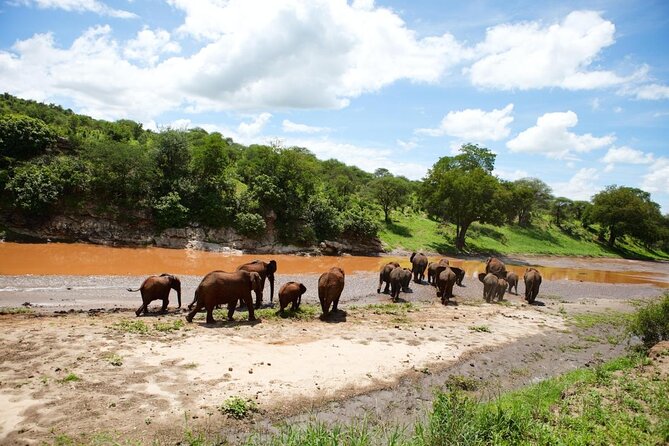
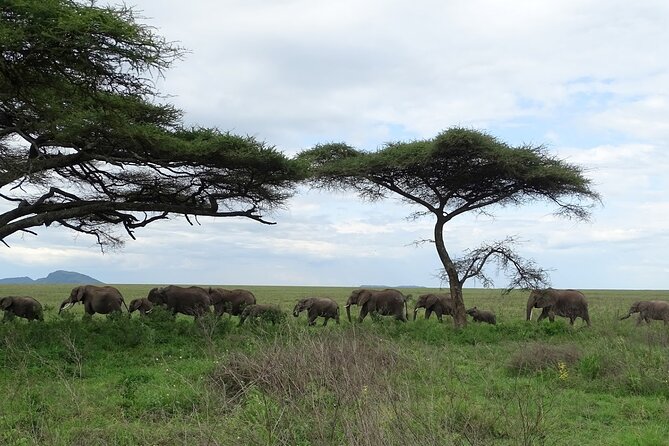
Day one takes you southwest from Arusha to Tarangire National Park. The park is best known for its large elephant herds, and it offers an immediate introduction to the kind of wildlife viewing this trip is built around.
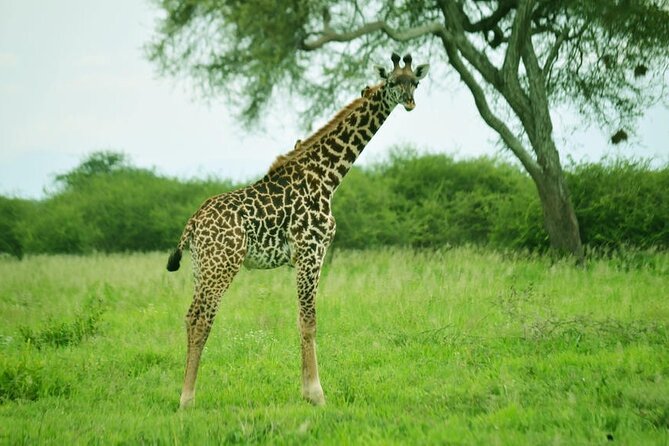
The scenery shifts between grass, acacia woodland, and forest. That variety helps explain the animal list here. You might find giraffes, buffalo, elands, kudus, and the unusual gerenuk, a long-necked antelope that can look almost comical when it reaches up to feed.
Birdlife adds another layer. Yellow-breasted lovebirds are among the smaller creatures you might spot, and the park has enough habitat variety to keep the drive from feeling like a search only for large mammals. Lions, leopards, and hyenas are present as well, though no sighting is promised. Wild dogs are very rare in the park, so do not book this trip with the expectation of seeing them.
The day is listed at about 10 hours, including the park visit and the journey to your overnight camp or lodge. That is a full opening day, but it makes good use of your first morning. You should be ready for a long ride and keep your expectations flexible. Wildlife does not follow a timetable, and the guide may need time to locate animals.
The camping setup is practical rather than luxurious. Tents, sleeping bags, and mattresses are included. Meals and bottled water are also supplied, with at least three litres of water a day listed for each person. Wine and soft drinks are included too, an unusual touch for a camping safari.
Serengeti: the long drive is part of the reward
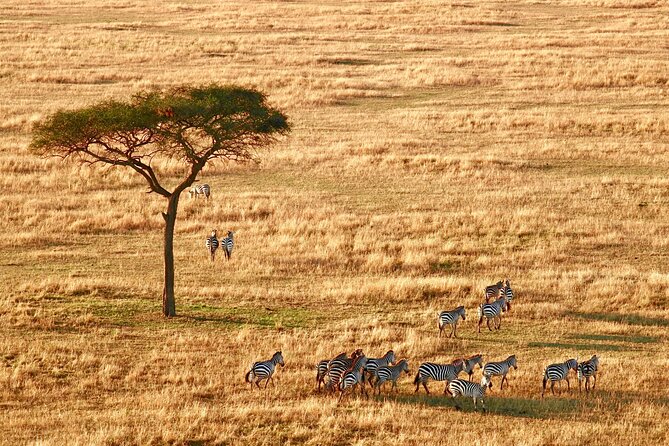
After breakfast on day two, you leave camp or lodge and head toward the Serengeti through the Ngorongoro Conservation Area. The approach passes through the Naabi Hill Gate area, where wooded hills give way to the famous open plains.
This is the section that gives the safari its grandest sense of space. The Serengeti covers roughly 6,000 square miles, and its name comes from the Maasai word Siringet, often translated as the land that flows on forever. The phrase makes sense once the trees thin and the horizon stretches in every direction.
The Serengeti is famous for the annual movement of about 1.5 million wildebeest, but the migration is not a guaranteed feature of every four-day departure. Its location changes with the season, and the route details do not specify travel dates. You should see the Serengeti as a superb wildlife park in its own right, not only as a migration trip.
The open plains can make animals easier to scan for, especially when your guide knows where to look. Godfrey is particularly praised for spotting animals, explaining what you are seeing, and checking that the group is comfortable. The supplied feedback also identifies him as a friendly guide who can speak several languages, including Spanish. Other names appear in the feedback as Gori and Godi, so confirm your assigned guide when booking if language support matters to you.
Day two is listed as a full day. That should tell you something about the pace: this is not a short transfer followed by a relaxed afternoon. You are crossing a large area, and the drive itself is part of the safari experience. The reward is access to one of Africa’s most famous wildlife settings.
Serengeti morning: the best time for active animals
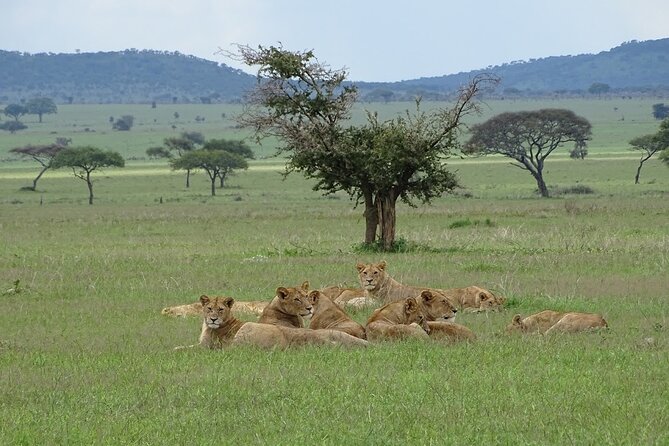
Day three begins with an early morning game drive in the central Serengeti. This timing is one of the strongest parts of the plan. The air is cooler, and animals are often more active before the heat of the day builds.
You return to camp for brunch at about 11:30 a.m. The schedule allows roughly four hours for the morning outing and lists the day at about 12 hours with the drive toward the Ngorongoro Conservation Area. That is the longest day, so plan for a tiring but productive stretch.
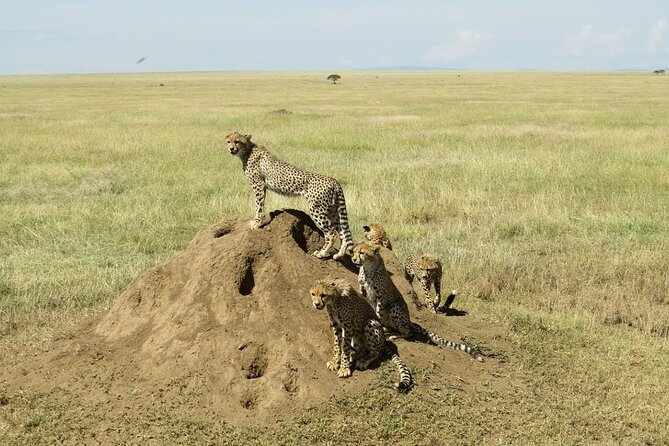
The early drive is also your best chance to enjoy the Serengeti without spending every hour in the midday heat. You may find lions, buffalo, elephants, leopards, or other plains animals, but no guide can promise a complete Big Five count. The safari is successful when you see a good range of wildlife and understand the behavior and setting, not only when you tick five names off a list.
Olduvai Gorge may be included on the return route if you are interested in archaeology and Maasai culture. The supplied details do not state an extra fee or a fixed stop length, so treat it as a possible addition rather than the main purpose of the day.
For history-minded visitors, this can add welcome depth to a trip focused on animals. For someone who wants every possible minute on game drives, it may feel like a competing use of time. Tell your guide what matters most to you.
More Camping Safaris in Arusha
- 4 Days Group Camping Safari
★ 5.0 · 1,101 reviews - 5 Days Group Camping Safari
★ 5.0 · 730 reviews - 6 Days Tanzania Budget Camping Safari
★ 5.0 · 145 reviews - 5-Day private Camping Safari Tour in Tanzania
★ 5.0 · 86 reviews
Ngorongoro Crater: a concentrated final game drive
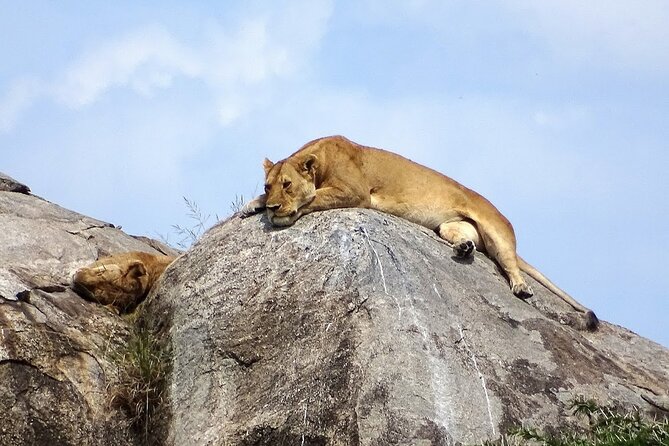
The last morning starts early, with a packed picnic lunch for the descent into Ngorongoro Crater. The vehicle drops about 2,000 feet to the crater floor, where permanent water, pasture, swamps, and forest support a high concentration of wildlife.
Ngorongoro is a huge volcanic crater, and the enclosed setting changes the feel of the safari. Instead of scanning endless plains, you are exploring a contained area with several habitat types close together. Up to 25,000 larger animals are said to live here, which helps explain why the crater is often a strong place for a final game drive.
Black rhino is one of the key possibilities. The crater is also associated with rare sightings such as the black-maned lion. Again, these are possibilities rather than promises, but the combination of habitat and animal density gives this day real value.
The game drive lasts about six hours, followed by the return to Arusha. You should expect to arrive back at your lodge or hotel late in the afternoon. The early start and picnic lunch keep the day focused on the crater, rather than breaking it up with a return to camp.
I like ending here. After the large-scale Serengeti, Ngorongoro offers a compact final chapter with varied scenery and a strong chance of seeing several large mammals in one outing. The drawback is that the final drive back to Arusha can feel long after an early start.
What the private format changes
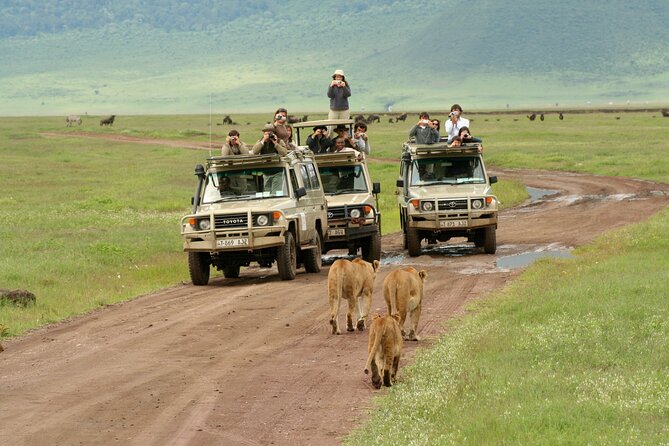
A private safari gives you more control than a shared departure. Your group alone takes part, so you can ask to stay longer when a lion, elephant, or other animal is putting on a show. You can also tell the guide if you want to give more time to wildlife, scenery, archaeology, or photography.
The strongest personal praise attached to this safari centers on the guide. Godfrey is described as kind, attentive, and skilled at finding animals that are not obvious at first glance. The feedback also credits him with explaining the parks clearly and checking whether everyone is comfortable.
That personal attention matters on long drives. A guide who listens can help make a 10-hour day feel purposeful rather than mechanical. Still, private does not mean leisurely. The route remains demanding because the parks are far apart and the schedule has to fit three major sites into four days.
The tour also includes a cook, according to the supplied information. Meals are part of the package, and the food is described as a positive part of the camping setup. You should still remember that camping meals are not the same as ordering from a hotel menu. The advantage is convenience and a more complete safari routine.
What the $1,436 price covers
At $1,436 per person, this is not a budget day trip. It is a four-day private safari with three major parks, accommodation, camping equipment, food, water, park fees, taxes, airport transfers, and Fly & Bug spray for use in the parks.
That list changes the value calculation. Park entrance charges alone can make northern Tanzania safaris expensive, and this package also removes several costs you would otherwise need to arrange separately. Four breakfasts, three dinners, and four lunches are included, along with bottled water, wine, and soft drinks.
A recommended total tip of $40 per person is not included. You should set that amount aside if the guide, cook, and support team provide good service. Tips are separate from the advertised price.
Group discounts are available, although the amount is not specified. If you are traveling with friends or family, ask for the group rate before paying. A private booking can become better value when the cost is shared among several people, especially because you are not paying for separate park arrangements, meals, and transfers.
Camping, comfort, and practical demands
Camping is central to the experience. Tents, sleeping bags, and mattresses are supplied, so you do not need to bring a full camping kit. Accommodation is included, but the details do not specify the exact camps, tent type, bathroom setup, or whether every night is in a tent or lodge.
That uncertainty is worth clearing up before you book. If you need a private bathroom, a particular bed style, or lodge nights instead of camping, ask Rehoboth Safaris directly. The package is designed for people who accept simple safari accommodation in exchange for access to the parks and a lower cost than a fully luxury itinerary.
Three litres or more of bottled water per day is included. Bring sun protection and personal items, but the tour also supplies fly and bug spray for use in the parks. The details do not list binoculars, camera equipment, or luggage limits, so confirm those points if they affect your plans.
The activity requires reasonable stamina. Most people can participate, but you should be comfortable with early starts, rougher vehicle movement, long drives, and basic camping. The private setting helps, but it cannot shorten the distances between Arusha, Serengeti, Ngorongoro, and the return point.
Who should book this safari
I would recommend this trip to a first-time safari visitor who wants the major northern Tanzania parks in one compact journey. It suits you if the Big Five matter, you want a private vehicle, and you prefer spending money on time in the parks rather than high-end rooms.
It is also a good fit for a small group with shared interests. Spanish speakers may appreciate confirming whether Godfrey is guiding their departure, since he is described as speaking Spanish well. The multilingual support could make explanations about animals, culture, and park rules easier to follow.
I would hesitate to recommend it to someone who dislikes long drives or camping. Four days is enough to see a great deal, but not enough to make every transfer short. If you want several slow mornings, a swimming pool, or guaranteed time at one park, choose a longer and less packed safari.
You also need realistic expectations about the Big Five. This route gives you strong opportunities, especially in the Serengeti and Ngorongoro, but no wildlife trip can promise all five animals. A good guide improves your chances, not the laws of nature.
Should you book the four-day safari?
Book it if you want a private, well-covered route through Tarangire, Serengeti, and Ngorongoro, and you are comfortable trading hotel comfort for more time in the parks. The combination of park fees, meals, water, camping equipment, transfers, and a guide makes the $1,436 price easier to justify.
Before paying, confirm the exact accommodation, vehicle arrangements, guide assignment, and whether Olduvai Gorge is included on your departure. If the answers suit you, this is a focused way to see northern Tanzania, with especially strong appeal for anyone hoping to see elephants, lions, rhinos, buffalo, and leopards in one trip.
Free cancellation is available up to 24 hours before the 7:00 a.m. start time. Changes or cancellations inside that window are not accepted for a refund, and poor weather may lead to a new date or full refund.
FAQ
Where does the safari start?
The safari starts in Arusha, Tanzania, at about 7:00 a.m. Pickup is offered.
Which national parks and conservation areas are included?
The route includes Tarangire National Park, Serengeti National Park, and the Ngorongoro Conservation Area, including a game drive on the Ngorongoro Crater floor.
Is this a private safari?
Yes. Only your own group takes part in the activity.
How long is the safari?
The safari lasts approximately four days. Individual days are listed at about 10 hours, one full day, 12 hours, and six hours.
Is camping equipment provided?
Yes. Tents, sleeping bags, and mattresses are included.
Are meals and drinks included?
Yes. The package includes four breakfasts, three dinners, four lunches, bottled water of three litres or more per day, wine, and soft drinks.
Are park fees included?
Yes. All park entrance fees and taxes are included.
Is the Big Five guaranteed?
No. The route is designed for Big Five wildlife viewing, and the parks contain lions, leopards, rhinos, buffalo, and elephants, but sightings cannot be guaranteed.
What is the cancellation policy?
You can cancel up to 24 hours before the start time for a full refund. Cancellations or changes made less than 24 hours before the experience are not accepted for a refund.
More Safaris in Arusha
- 7-Day Premium Luxury Tanzania Safari All-Inclusive
★ 5.0 · 426 reviews - 8 Days Great Wildebeest Calving Migration Safari from Arusha
★ 5.0 · 254 reviews - Group Safari 7 Days in Tanzania’s Main Parks
★ 5.0 · 240 reviews - Tanzania Simba Safari – 5 Days
★ 5.0 · 217 reviews
More Private Tours in Arusha
- 5 Days Budget Private Safari, Tanzania
★ 5.0 · 191 reviews - 5-Day Private Northern Tanzania Safari from Arusha
★ 5.0 · 182 reviews - 6 Days Private Budget Safari
★ 5.0 · 163 reviews - 5-Day Private midrange Tour in Arusha with Airport Pickup
★ 5.0 · 160 reviews
Just added around Arusha
- From Arusha: 11 days The Classics Northern Tanzania safari★ 5.0 · 11 reviews
- 6-Day Mount Meru Climb through Momella Route Guided Tour★ 5.0 · 5 reviews
- Private Day Trip to Arusha National Park with a Walking Safari★ 5.0 · 4 reviews
- From Arusha : 11-day Amazing North Tanzania safari tour★ 5.0 · 4 reviews
- Walking Day Tour to Safari in Arusha National Park★ 5.0 · 5 reviews
- 2 Days Tanzania Midrange Group Join Safari★ 5.0 · 7 reviews
- Best 5 Days Tanzania Private Luxury Safari with luxury Lodges★ 5.0 · 12 reviews
- Waterfall & Coffee Walking Tour★ 5.0 · 6 reviews
Big Five Safaris, compared.
2 days Mid Range Safari in Ngorongoro and Tarangire Big 5 Parks
Read our review →
1-Day Ngorongoro Crater Special Big 5- Joining Group Safari
Read our review →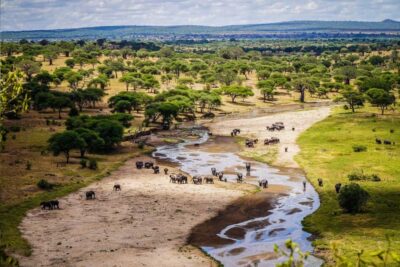
Browse the lists this tour appears in